Self-Service or Wash and Fold for Bulky Loads: How to Choose the Easier Option
Bulky laundry items like comforters, bedding sets, and towers of towels pose a special challenge. They’re heavy, oversized, and can be tough to clean in a standard home washer. If you’ve ever asked yourself, “Should you use wash and fold or self-service for bulky loads like towels and bedding?”, you’re not alone. Choosing between doing it yourself at a laundromat or using a wash-and-fold service depends on your specific needs, schedule, and resources. This guide will walk you through the pros and cons of each approach so you can decide what’s easiest for your big laundry loads each time.
SpinCycle is here to support you either way – whether you prefer the hands-on approach at our self-service laundromat or the convenience of dropping off your bulky laundry for professionals to handle. In fact, many people turn to a wash and fold for bulky laundry service when faced with mountains of bedding or a giant comforter, while others head to a laundromat to tackle it themselves. We’ll cover what counts as a bulky load, why these loads are harder to manage at home, and how commercial machines and expert services can make a difference. By the end, you’ll have a clear idea of when to opt for DIY large load laundry and when a bulky laundry service might be the smarter choice.
What Counts as a Bulky Load?
Let’s define “bulky” in the context of laundry. A bulky load is any laundry load that is physically large, unusually heavy, or hard to fit in a normal washing machine. These are items or amounts of laundry that push the limits of your washer’s capacity. Common examples include:
- Large bedding – comforters, duvets, quilts, mattress pads, and big blankets (especially queen or king size)
- Bath and beach linens – huge bundles of towels, bulky bath mats, or multiple fleece throws at once
- Oversized clothing or gear – items like winter coats, heavy curtains, sleeping bags, or a big load of sweaters
- Extra-large loads of regular laundry – e.g. an entire family’s weekly laundry compiled into one massive load (beyond what your home washer can handle without overstuffing)
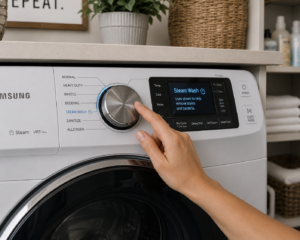
If you have to stuff or force an item into the washer, it likely counts as a bulky item. Many modern machines even have a “Bulky” or “Bedding” cycle setting – a clear sign that comforters and similar items are considered bulky loads. In short, if a load fills up most of the drum or makes the machine strain, it’s a bulky load that might need special attention.

Why Bulky Laundry Is Harder at Home
Washing bulky items at home is often difficult because typical household washers and dryers aren’t built for these oversized tasks. Most home washing machines have around a 3–5 cubic foot capacity. That might handle everyday clothes just fine, but a puffy king-size comforter or a heap of wet towels can easily max out the space. When a washer is overfilled, the water and detergent can’t circulate properly through the fabric. Parts of a comforter may stay dry or dirty, and clothes can come out still smelling less than fresh. Overloading also puts stress on the washer’s motor and suspension – if you’ve ever heard your machine thumping loudly or stopping mid-spin with a bulky load, you know the struggle.
Bulky loads are also prone to causing unbalanced spins. A soaking wet blanket or duvet tends to lump on one side of the washer drum, making the machine wobble or even shut down for safety. Home units might require you to stop the cycle, reposition the item, and start again to get through the spin. All of this means extra hassle and time. In fact, the average American family runs 8–10 loads of laundry each week (around 4–5 hours of total wash/dry time), and bulky items can stretch that even further with repeated cycles or do-overs. It’s no wonder many people procrastinate washing things like comforters – it can turn into an all-day affair at home.
Drying is another headache. A standard home dryer can struggle with large, thick items. That big comforter will tumble in a tight ball, often coming out damp in spots even after a full cycle. Then you’re looking at running the dryer again (and maybe again) or hanging the heavy item around the house for days. And remember, all that heavy wet weight can be rough on appliances – constantly washing and drying bulky loads could shorten the lifespan of your home machines.
There’s also the simple issue of convenience. Not everyone has an in-home washer/dryer (especially in city apartments), and even if you do, bulky laundry might monopolize your equipment for hours. Plus, wrestling a giant soggy comforter out of a top-loading washer, or untangling a wad of sheets, is physically tiring. For all these reasons, handling bedding and towel laundry at home is often harder than it sounds.
When Self-Service Makes More Sense
Heading to a laundromat to do it yourself can be the best option in many scenarios. Using a self-service laundromat is ideal when you:
- Have multiple bulky items to wash at once. At a laundromat, you can grab a couple of machines and tackle all your large load laundry in parallel. For example, wash all your blankets and comforters in separate machines simultaneously – something impossible to do at home. This saves huge time.
- Want to save money on service fees. Self-service is generally cheaper than using a wash & fold service because you’re only paying for machine use, not labor. If you’re on a budget, it often makes sense to do the work yourself. (Check out our pricing page to compare the cost of self-service machines vs. drop-off.)
- Prefer to control how your laundry is done. When you do it yourself, you can use your preferred detergent, set the washer cycle exactly how you want (temperature, extra rinses, etc.), and ensure delicate bulky items are handled to your standards. DIY laundry gives you peace of mind if you’re particular about the process.
- Need the laundry finished ASAP. Maybe you have guests coming tonight and you need that duvet clean now. At a self-service laundromat, you can get bulky loads washed and dried within a couple of hours on the same day. In contrast, a wash-and-fold service might not return your items until the next day.
- Don’t mind a little labor in exchange for speed or savings. For those who have the time and ability, doing bulky laundry yourself can even be satisfying. You get it all done and walk out with fresh, clean items immediately, without paying extra for something you can do just fine.
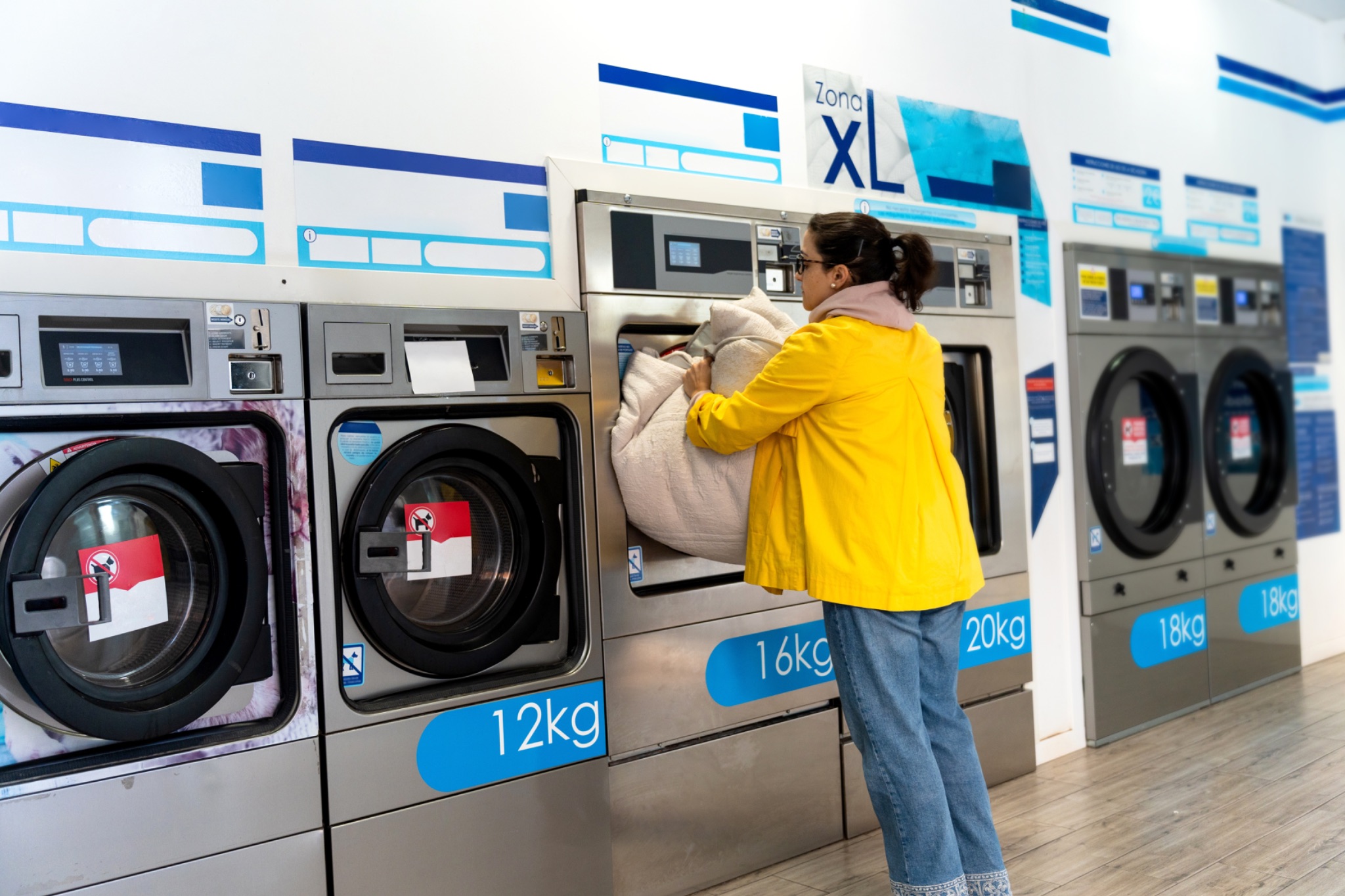
The key benefit of self-service is access to equipment that can handle what your home machines can’t. SpinCycle’s self-service laundry facility, for instance, offers plenty of oversized washers and dryers. Our self-service laundromat has machines ranging up to 140 lb capacity, so you can wash even a king-size comforter or an entire household’s bedding in one go. The facility is fully attended and equipped with conveniences like free Wi-Fi and vending machines, making your laundry session as pleasant as possible. If you’re willing to put in a bit of time, self-service can be a smart, cost-effective way to conquer those bulky loads.
When Wash and Fold Is the Smarter Choice
Sometimes, outsourcing the job is simply the better move. A professional wash-and-fold service can be a lifesaver in situations where:
- You’re too busy or drained. If you’re juggling work, family, or other responsibilities, you might not have a few spare hours to spend at the laundromat. Dropping off your bulky laundry at a wash & fold means you free up that time for other important tasks (or some deserved rest!).
- The laundry is physically too much to handle. Bulky loads can be heavy and hard to manage. Not everyone can comfortably lift a sopping wet comforter or haul a giant bag of towels around. Using a wash and fold service shifts that literal heavy lifting to the professionals, which is a smart choice if you have back issues, limited mobility, or simply don’t want to risk injury.
- You want pro-level results without the effort. Laundry attendants do this every day – they know how to get stains out, how to wash different fabrics properly, and how to dry and fold items perfectly. When you hand off your bedding and towel laundry to them, you’re likely to get crisp, clean, neatly folded results without any guesswork on your part.
- Consistency and convenience are priorities. With a wash & fold service, you can establish a routine (for example, dropping off every Monday and picking up Tuesday with fresh laundry). Many services, including SpinCycle, offer next-day turnaround and even same-day options. This reliability can reduce stress, since you know exactly when your clean bulky items will be ready.
- You have a huge backlog or special occasion. Maybe after vacation you returned with piles of sandy beach towels, or maybe it’s spring cleaning time and you have every blanket in the house to wash. When the volume is overwhelming, it might be worth paying for wash-and-fold by the pound to get through it all quickly, rather than doing load after load on your own.
In short, professional wash and fold service is the smarter choice when your time is scarce or you just want a hassle-free solution. SpinCycle’s wash & fold team, for example, will sort your items, wash and dry them in separate machines, and fold everything nicely for you. You simply drop off a heap of dirty bulky laundry and pick it up fresh and ready to use. Yes, it costs more than doing it yourself, but many people gladly pay for the convenience and quality. It’s an especially great option for city dwellers without in-home machines, parents with too much on their plate, or anyone who just needs a break from laundry duty.

How Commercial Machines Handle Bulky Laundry Better
Whether you’re doing laundry yourself at a laundromat or leaving it to the pros, one big advantage is the machines themselves. Laundromat high-capacity washers and commercial dryers are specifically designed to handle oversized loads in ways that typical home units can’t. First, the washers are huge – often with drum capacities of 4 to 10 times that of a standard household washer. This means bulky items can move freely as they wash. Water and detergent circulate thoroughly, reaching every fiber of that big comforter or sleeping bag. The result? A deeper clean with no dry spots or missed patches.
Commercial washers also have powerful motors and suspension systems that can tackle heavy, sopping-wet textiles without breaking a sweat. Ever notice how a large front-load laundromat washer hardly flinches even when spinning a load of rugs or blankets? Those machines are built for it. They spin faster, too – a high-speed spin extracts much more water from bulky laundry, so your items come out merely damp instead of sopping. This significantly cuts down on drying time. Additionally, many laundromat washers automatically add extra water or adjust the cycle for bulky items (some even have a preset “bulky” cycle) to ensure nothing gets trapped full of soap.
On the drying side, commercial dryers are extra large and high-powered. They have bigger drums with more room for things to tumble. Increased airflow and heat capacity mean that even a queen-size comforter can dry more evenly and faster than it would in a small home dryer. The added space prevents the item from just wadding up and rotating in one damp clump – it has room to fluff and toss around. Plus, you can often open the dryer midway and reposition the item or add dryer sheets/balls, then continue the cycle, which some home units don’t allow easily.
The bottom line: commercial machines are made for heavy-duty use. They’re more efficient per pound of laundry too. By using a single 60–80 lb capacity washer at a laundromat, you might wash in one load what would take five cycles in a small home washer. That saves on total water and energy used. It’s also gentler on your personal appliance – you’re sparing it the punishment of an oversized load. So whether you choose self-service or drop-off, letting those big machines do the work is often the smartest way to get bulky items truly clean.
Drying Challenges and Solutions
Bulky loads don’t just take longer to wash – drying them is its own challenge. Thick comforters, dense towels, and heavy blankets hold a ton of moisture after washing. Cramming them into a small dryer can lead to an exercise in frustration: they’ll tumble a bit, then ball up, and the center stays wet. You might pull out a comforter after 60 minutes to find the outer fabric hot and dry but the inside still damp. Running multiple dry cycles back-to-back isn’t great for your appliance or your utility bill. And air-drying these big items can require a lot of space and a lot of time (sometimes days) to fully dry, especially in humid weather. Given that about 90% of all laundry loads in the U.S. are dried in a machine rather than air-dried, it’s especially important to dry bulky items correctly to avoid mildew and odors.
Thankfully, there are solutions. If you’re using a laundromat, opt for the largest dryer available and don’t overload it – give that bulky item room to move. It can help to add a couple of clean tennis balls or dryer balls into the dryer alongside a comforter or pillows. This simple trick improves airflow and breaks up clumps, allowing the item to dry faster and more evenly. (In fact, laundry pros swear by tossing tennis balls in the dryer with bulky bedding to fluff it up and prevent damp spots.) Also, use a low or medium heat setting for bulky items – it may take a bit longer, but high heat can overdry the outside while the inside remains wet, or worse, it can scorch certain fabrics.
If you’re drying at home and find the item is too large for your dryer, try repositioning it a few times during the cycle. Pause the dryer, pull the item out, shake it open, and put it back in to help it dry uniformly. You can also drape large wet items over two chairs or a railing for an hour to let some moisture evaporate before throwing them in the dryer. This reduces how much work the dryer has to do. And if you have a sunny day and space outdoors, consider air-drying bulky bedding on a clothesline or over a fence – sunlight is a natural sanitizer and can help freshen the fabric (just be sure to fully dry everything to avoid mildew).
The key with drying bulky laundry is patience and circulation. Commercial dryers at laundromats usually win in this department, because they’re big and get really hot without cooking your fabrics. But no matter where you dry, remember to ensure the item is completely dry before storing it. Even a hint of lingering dampness deep inside a comforter can lead to musty odors or mildew. By using the right techniques – from dryer balls to air fluffing – you’ll conquer the drying challenge and end up with fresh, fluffy results.
Tips for Transporting Large Laundry Loads
One often-overlooked aspect of dealing with bulky laundry is getting it to and from the laundromat or dry cleaner. Here are some practical tips to make transporting those large loads easier on you and your vehicle:
- Use sturdy, oversized laundry bags. Invest in a couple of heavy-duty laundry bags or duffels that can fit big items. Plastic trash bags can work in a pinch for things like comforters, but they tear easily under weight, so a durable canvas or nylon laundry bag is safer for lugging heavy loads.
- Don’t overload a single bag. It’s better to split a huge pile of laundry into two manageable bags than to stuff it all in one and risk it being too heavy to lift (or ripping the bag). Remember, wet items weigh even more, so plan for that if you’ll be bringing things home damp.
- Use wheels if possible. Save your back by using a rolling laundry cart or suitcase for heavy items. Many laundromats have wheeled carts you can use on-site to get your laundry from the car to the machines. If you have to park far away, consider a foldable trolley or even a stroller to move bags – it sounds funny, but it works!
- Protect your car. If you’re transporting a freshly washed but not fully dried item (like a comforter that’s still a bit damp), lay down a plastic sheet or garbage bag in your trunk to protect your car’s interior. Also, flatten or fold bulky items evenly to avoid blocking your rear view – safety first.
- Mind your posture when lifting. A bag of wet towels can easily weigh 20–30 pounds. When you pick up these loads, squat and lift with your legs, not your back. It’s easy to strain yourself hoisting a big bundle of laundry – take it slow and ask for help if needed, especially with awkward items like rugs or oversized comforters.
Finally, if transporting large loads is something you just can’t or don’t want to deal with, remember that help is available. You can skip the car trip altogether by using SpinCycle’s laundry pickup and delivery service. For example, if you schedule a pickup, our team will come collect your bulky laundry right from your doorstep and deliver it back to you clean and folded. This is a fantastic option for anyone without a vehicle, or if the items are too unwieldy to carry. One way or another, don’t let logistics stop you from getting those big items cleaned – with a bit of planning (or a helpful service), you can get it done without the drama.
How to Choose What’s Easiest This Week
Faced with a mountain of laundry, especially the bulky stuff, you have options. But how do you decide between self-service vs wash and fold for any given load? The “right” choice can change from week to week. Ask yourself a few questions:
- How much time do I have? If this is a hectic week and you’re short on time, using wash & fold might be easiest – you can drop off and let someone else handle it. If you have a free morning or afternoon, you might prefer to save money and do it yourself at the laundromat.
- What’s my budget right now? When money is tight, paying a service fee for wash-and-fold might not make sense if you can spend a few dollars on self-service machines instead. On the other hand, if you’re comfortable paying for convenience, the cost of wash & fold can be well worth the time saved. (Consider the value of your time – sometimes outsourcing for $20 is better than stressing for hours.)
- How tough is this load to handle? Think about the effort involved. Is the load just a bunch of towels you can easily manage, or is it a super king comforter that barely fits in your car? If it’s the latter, you might lean towards having professionals take it. Also, consider if you have any special care items – if you’re not sure how to clean that delicate oversized duvet, a pro service might be safer.
- Do I need it done by a certain deadline? If you have a strict timeline (e.g., leaving for a trip and need all bedding clean by tomorrow), weigh speed vs. availability. A laundromat allows immediate same-day washing, but if you truly have zero time to attend to it, a rush wash-and-fold order (if offered) could be your solution. Just factor in that some services need at least a day.
By evaluating your time, budget, physical capacity, and urgency, you can figure out what makes sense for each bulky load. Some weeks, doing it yourself will be no big deal. Other weeks, sending it out will save your sanity. Both choices are valid – it’s about what helps you most in the moment.
Good News: You Don’t Have to Pick Just One
The beauty of having both options available at SpinCycle is that you can mix and match as life demands. There’s no rule that says you must always do self-service or always use wash-and-fold. You have the freedom to choose what works best for you each time. Maybe this month you’re energetic and decide to swing by the laundromat to handle all your bulky laundry personally. Next month, you get busy or just need a break, so you drop off those big items for wash and fold. That’s completely okay!
In fact, many customers use a hybrid approach. You might wash everyday clothes at home or in our self-service machines, but treat yourself to professional help for the really large stuff like comforters and rugs. Or you might normally do it yourself, but arrange a pickup when you’re on vacation or swamped with work so you don’t come home to dirty laundry. The take-home point is flexibility. SpinCycle is happy to accommodate whatever laundry approach makes your life easier at any given time. We’re here to provide a clean, friendly laundromat when you want to DIY, and we’re here with an excellent wash-and-fold team when you’d rather not lift a finger.
Bulky loads can be a handful, but with the right choice of service (and sometimes a little creativity), they don’t have to be a headache. The next time you stare down a pile of bedding or an overflowing hamper of towels, remember: you have options. Self-service or wash and fold – whichever route you choose, SpinCycle has you covered so you can get those big loads done with minimum hassle and maximum peace of mind.