How to Get Detergent Stains Out of Clothes
You pull a load of laundry from the washer expecting perfectly clean clothes – only to find white streaks or sticky patches that weren’t there before. Frustrating, right? Don’t worry, you’re not the only one dealing with this issue. In fact, a recent survey found over 70% of people have encountered that chalky detergent residue on laundry after washing. The good news is these “stains” are usually easy to fix and even easier to prevent once you know how. In this guide, we’ll explain why detergent stains happen, how to identify detergent residue, the best ways to remove it, and steps to avoid it in the future. By the end, you’ll have fresh, clean clothes (not sticky ones!) and fewer laundry headaches.
Why detergent stains happen
Most detergent stains are actually caused by excess detergent or improper washing conditions. In other words, the detergent itself didn’t fully rinse out. The number one culprit is using too much detergent. It’s tempting to pour in a extra “just in case,” but laundry isn’t a “more is better” situation. Extra soap creates excess suds that don’t all rinse away, leaving a film on fabric. According to Maytag, adding more than the recommended dose of detergent can leave clumpy white streaks that linger when the soap isn’t dissolved completely in water. This over-soaping issue is more common than you’d think – one study found 57% of people mistakenly believe using extra detergent gets clothes cleaner, when it actually causes residue buildup.
Water temperature and cycle settings also play a role. If you wash in water that’s too cold, powdered detergent may not dissolve fully, leading to white powdery blotches (especially on dark fabrics). Even liquid detergents can leave a greasy-looking mark if they don’t disperse well in cold water. A quick, low-agitation wash cycle might not give detergent enough time to distribute and rinse out either. Hard water in your home is another factor – water high in minerals like calcium can react with soap and cause a white or gray film on clothes. (Ever notice stiff, scratchy clothes with light streaks? Hard water could be to blame.) Overloading the washer is yet another cause: when you stuff the drum completely full, there isn’t enough room for water to circulate, and detergent can get trapped in folds of clothing. The result? Patches of detergent residue that dry into visible “stains.”
Even the type of washer and detergent matters. High-efficiency (HE) washing machines use less water, so they require low-sudsing HE detergent. If you use regular detergent or too much soap in an HE machine, the low water levels make it much harder to rinse everything out. Suds can linger on clothes (and even inside the machine). We’ll talk more about HE machines in a bit, but the short story is that detergent is supposed to help remove stains – yet when it isn’t used properly, it can leave new stains of its own. The key takeaway: most “detergent stains” are completely preventable by using the right amount and type of soap, adequate water (temperature and volume), and giving your laundry plenty of room to get thoroughly rinsed.
How to identify detergent residue
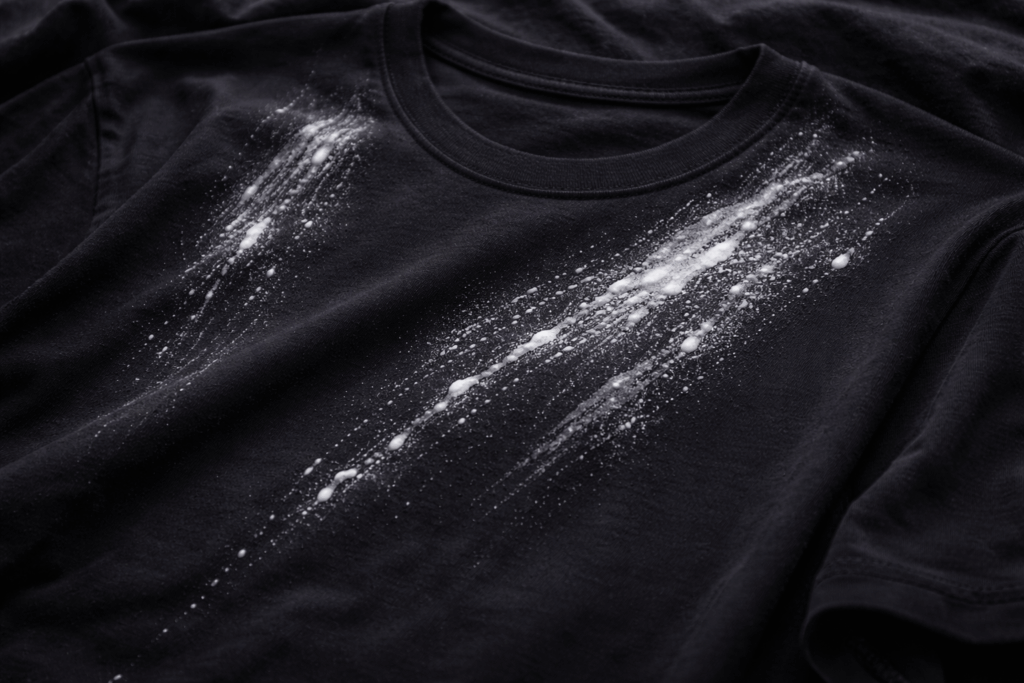
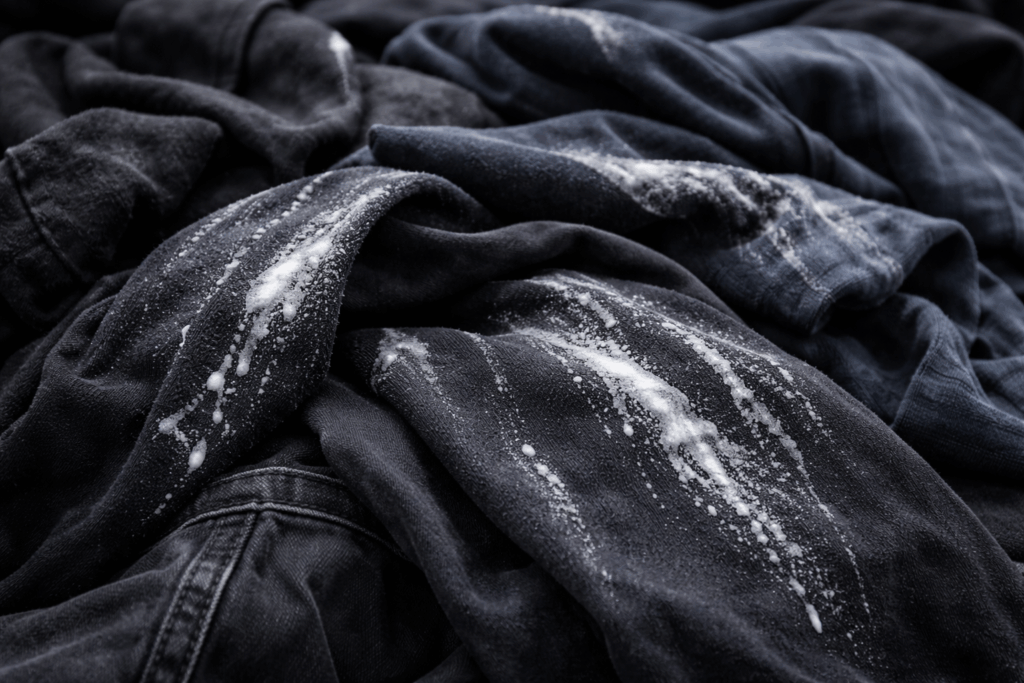
How can you tell if those mysterious marks are detergent residue? Detergent stains have some telltale signs. They often appear as white or light gray streaks, blotches, or chalky patches on fabric. On a dark shirt or pants, it might look like someone sprinkled baby powder or chalk dust in spots. Sometimes the residue can have a faint blue or green tint if your detergent has added dyes – so a bluish splotch on clothing could actually be dried detergent. Another clue is texture: detergent residue may leave affected areas feeling slightly rough or stiff to the touch, rather than soft. For liquid detergents, the leftover stain might be a faint oily or shiny spot that you notice when it catches the light. It can even feel a bit waxy or sticky if you rub it between your fingers.
A simple test: try wiping the streak with a damp, clean cloth. Does the white streak smudge or start to dissolve with water? If yes, it’s likely soap residue. True dirt or other stains wouldn’t dissolve so easily. Detergent residue on laundry often sits on the surface of fibers, so it will come off or dilute when rewetted. You might also notice soap scent lingering on clothes that have these marks, another hint that detergent is still present. Clean clothes are supposed to smell fresh but neutral – if a strong soapy fragrance or a slight slick feel remains, you might be dealing with leftover detergent. The good news is that since these “stains” are just soap, they are not permanent. Unlike a dye or oil stain that penetrates fibers, detergent residue rests on the outside of fabric and will usually come out with thorough rinsing or washing. In short, if you’re seeing powdery white streaks after washing or your clothes feel filmy/sticky, it’s a sign that detergent didn’t fully rinse out.
Best ways to remove detergent stains

Detergent stains may look alarming, but they’re usually one of the easiest stains to remove. After all, it’s just soap! The key is to re-dissolve and rinse out the detergent residue. Here are the best ways to get detergent stains out of clothes:
- Rinse or soak the item in warm water. If you catch the problem before the clothes go in the dryer, start by rinsing the affected clothing under running water. Hold the fabric taut under a faucet and let cold water flush through the stain, rubbing the fabric gently together. This can push out a lot of the detergent residue right away. If multiple pieces or an entire load have white residue, fill a sink or bucket with warm water (or the hottest water safe for the fabric). Warm water helps dissolve detergent much more effectively than cold. For an extra boost, mix in a cup of white vinegar per gallon of water – vinegar is fantastic for breaking down soap and mineral deposits. Submerge the clothes and swish them around. Let them soak for about 30 minutes, which will loosen the detergent’s grip on the fibers. You can periodically rub fabrics together or use a soft brush on any visible streaks to help dislodge the soap.
- Rewash the clothes with no detergent (and an extra rinse). After soaking, it’s important to run the clothes through a wash cycle to thoroughly flush out the remaining residue. But this time, do not add more detergent – they don’t need more soap, they need more rinsing. Toss the garments in your washing machine and select a normal or heavy cycle (avoid quick wash modes here). Use warm water if the care labels permit; if the clothes are dark or delicate and you’re worried about color or shrinkage, use cold water but be aware you might need an extra cycle. Most washers have an “extra rinse” option – definitely use it in this case. The extra rinse ensures all the loosened detergent and vinegar gets washed away. Essentially, you’re giving the clothes a thorough water bath to carry off any soap. If you only have a couple of items, you can also hand-wash them in a basin of clean water to rinse them out instead of a full machine cycle. The main goal is lots of water and agitation with no additional soap.
- Check for residue before drying and repeat if needed. Once the second wash (or rinse) finishes, take a close look at your clothes before you dry them. If they look clean and free of streaks, great! Go ahead and dry as usual. But if you still spot any white residue or feel any sticky areas, do not put them in the dryer just yet. Heat can set detergent residue and make it harder to remove, so you want to be sure it’s gone. If needed, you can do another round of soaking and rinsing. Often a vinegar soak and one rewash will do the trick, but really heavy detergent buildup might require a second pass. For particularly stubborn spots (especially those shiny, greasy-feeling ones from liquid detergent), try applying a bit of dish soap directly to the area and gently rubbing it, then rinsing – dish soap is formulated to cut grease and can help lift that film. Another hack for dark clothes: rewash them with half a cup of baking soda in the water (and no detergent). Baking soda helps strip away soap residue and is color-safe, so it’s a good trick for black or navy fabrics that you want to be gentle with. Keep rinsing until you’re confident all the detergent is out.
- Air dry or use low heat initially. After you’ve removed the detergent stains, it’s wise to air dry those items or use a low-heat setting the first time, just to ensure any tiny bit of residue you might have missed doesn’t get “baked” on by high heat. In most cases this isn’t a big concern, but it’s a cautious step. Once you’re sure the clothes are truly clean (no chalky feel or streaks when dry), you can return to your normal drying method. The final result should be clothes that look and feel clean, without any streaks, powder, or slimy film. If you followed the steps above, you should end up with soft fabric that smells fresh and is free of that soapy feel. Remember: what you’re doing here is essentially giving the laundry a thorough second rinse. It’s a little extra effort now, but it saves your outfits and restores them to how they should be.
One more tip: if you ever open the washer and see a ton of suds clinging to your clothes (a sign of serious over-soaping), you can pour in a capful of white vinegar or even liquid fabric softener and run an extra rinse cycle right then and there. This helps neutralize and reduce suds on the spot. It’s a quick fix to prevent a sudsy load from drying with residue. But the better long-term solution is adjusting how much detergent you use going forward. Now that you’ve rinsed out the excess, let’s make sure those detergent stains don’t come back.
Prevention: how to avoid future detergent buildup
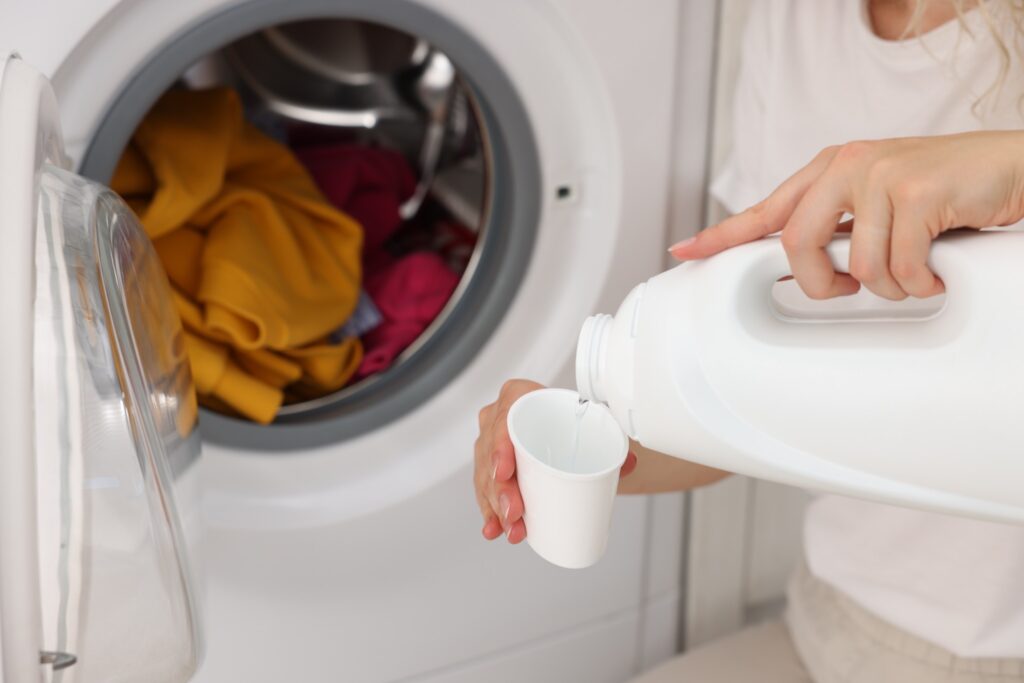
The best way to deal with detergent stains is to not get them in the first place. A few simple habit changes can guarantee you never pull out clothes with white residue again. Here’s how to prevent detergent buildup on your laundry:
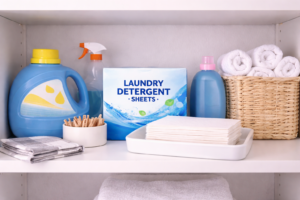
- Use the right detergent – and the right amount. Always measure your detergent, rather than just eyeballing a heaping capful. Check the detergent label for the recommended dose based on your load size and soil level. In most cases, you really don’t need much. (Those hefty caps on detergent bottles are often misleading – filling a cap to the brim is usually far too much soap!) When in doubt, start with a little less than suggested; you can always increase slightly if you find your clothes aren’t getting clean, but chances are they will. If you have a high-efficiency washer, make sure you’re using HE detergent specifically formulated for those machines. High-efficiency detergent is low-sudsing and designed to rinse out in less water. Using regular detergent in an HE washer is asking for residue trouble. Also, note the concentration of your detergent (2x, 4x, 8x, etc.) – ultra-concentrated formulas need only a small fraction of a capful. A good rule of thumb for HE machines is that even 1 to 2 tablespoons of liquid detergent can be enough for a full load. (Yes, tablespoons!) In fact, Speed Queen washers’ experts note that more detergent isn’t better at all – excess soap often just stays in your clothes. So measure carefully. Proper dosing not only prevents white streaks, but also gets your clothes just as clean and saves you money on detergent in the long run.
- Give your washer room to work. Avoid overloading the machine with too many clothes in one load. Packed loads are a recipe for detergent residue because there’s not enough water or space for proper rinsing. Aim to fill the washer about three-quarters full or less, so garments can tumble and circulate freely. This allows detergent to distribute and then rinse away completely. If you consistently see residue, try doing slightly smaller loads – you might be surprised that your clothes come out cleaner when they have a bit more breathing room. Similarly, use an appropriate wash cycle. Heavy or bulky loads need longer wash and rinse times (or more water) to clear out soap. High-efficiency machines often have settings like “Deep Water” or extra rinse options; don’t be afraid to use those if you’re washing a big batch of towels or jeans, for example. The extra few minutes and gallons of water for an extra rinse can save you from having to rewash items later. In short, give your laundry plenty of water and agitation so nothing is trapped. Your goal is every trace of detergent gets washed out with the rinse water, leaving nothing behind on fabrics.
- Choose warm water or extra rinses when needed. Think about the cold vs warm water rinse question – while cold water is fine for many loads (and great for saving energy and protecting colors), it doesn’t dissolve detergent as easily. If detergent residue has been a problem, consider using warm water for the wash or rinse cycle for items that can handle it. Even a modest increase in temperature can help break down suds. For example, you might wash everyday light-colored clothes in warm instead of cold, or use a warm rinse on your darks (they’re less likely to fade from a rinse than from a full hot wash). Many modern detergents are formulated for cold water, but if you’re still seeing residue, a bit of warmth can do wonders. Also, take advantage of that “Extra Rinse” button on your washer. It’s one of the simplest ways to prevent buildup. Running an extra rinse cycle ensures that any soap that might be hiding will be flushed out. This is especially useful for bulky items like blankets or if you accidentally poured in a bit too much detergent. It’s like giving your clothes a second shower – they’ll come out truly clean, not sticky. Bottom line: adjust water temp and rinsing to match your load’s needs, and err on the side of more rinsing when in doubt.
- Keep your washing machine clean. It sounds odd, but a dirty washer can make clean clothes come out looking dirty. Over time, soap scum and mineral deposits can accumulate inside your machine (on the drum, in the detergent dispenser, and around the door seal). If that buildup dislodges during a wash, it can redeposit on your clothes as white or gray streaks. Prevent this by giving your washer a little TLC. Ideally, run a cleaning cycle once a month. Most washers have a special “tub clean” or “clean washer” cycle – you typically run it empty with hot water and either a washer cleaner tablet or a cup of white vinegar. This clears out any residue lurking in the machine. Wipe down the rubber door gasket on front-loaders, and rinse out the detergent drawer periodically as well. If you have an older top-loader with no special cycle, a hot wash with vinegar or bleach (empty load) will do the job. By maintaining your washer, you ensure that nothing from prior loads (old soap, fabric softener gunk, mold, etc.) sneaks onto your next load of laundry. A well-maintained washer not only lasts longer and smells better, but also keeps producing truly clean, residue-free clothes.
With these preventative tips, you’ll greatly reduce the chance of ever seeing detergent residue again. Proper detergent usage, adequate rinsing, and machine care all work together to deliver clean clothes without the chalky aftermath. Next, let’s address a common question about modern washers: do high-efficiency machines make detergent residue more likely?
Do HE machines make this worse?
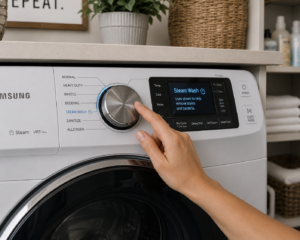
High-efficiency (HE) washers are designed to use less water and energy per load – a great innovation, but it does change how we use detergent. If you’re finding detergent stains frequently and you own an HE machine, you might wonder if the washer is to blame. The truth is that HE machines can be a bit less forgiving if you’re heavy-handed with detergent. Since they use much less water to rinse, any extra suds have a greater chance of lingering. Think of it this way: a small puddle of water can only dissolve and carry away so much soap. So, yes, overusing detergent or using the wrong kind in an HE washer can make detergent residue worse. For example, Whirlpool and other manufacturers strongly advise against using regular detergents in an HE washer because they produce too many suds for the low-water environment. Those suds don’t fully rinse out, often leaving soap film on clothes (and can even trigger extra rinse cycles or error codes in the machine). If you’ve ever opened your HE washer mid-cycle to find it filled with foam, that’s a sign of oversudsing – and likely a precursor to finding residue on fabrics later.
However, the blame isn’t on the machine itself – it’s on how we use it. HE washers actually clean very effectively with the right detergent practices. The solution is simple: always use HE-labeled detergent (which is formulated to be low-sudsing) and use a modest amount. Typically, HE machines need much less detergent than older washers did. You might find that using even half the amount recommended on the detergent bottle gets your clothes clean in an HE washer. Many HE owners learn that as little as 2 teaspoons to 2 tablespoons of liquid detergent is plenty, depending on load size. It may feel strange to use such a small dose, but the machine is engineered to work with that. When you get the amount right, an HE washer will rinse out everything just fine, and you won’t see any residue. In fact, our team has washed countless loads in HE machines and gotten perfectly clean, residue-free results by sticking to low-suds soap and proper dosing. So, do HE machines make detergent stains worse? They can if you treat them like a traditional washer. But if you play by the HE rules (use HE detergent and don’t over-sud), you’ll actually have less risk of residue and enjoy all the benefits of a high-efficiency clean. In short, the machine isn’t out to get you – it just demands a bit of detergent discipline! Follow the guidelines, and your HE washer will reward you with fresh, clean clothes with no unwelcome streaks.
When a laundry service can help

Let’s face it: dealing with extra rinse cycles, vinegar soaks, and careful measuring of detergent takes time. If you’re a busy person (and who isn’t these days?), you might not always have the patience to troubleshoot laundry residue issues. This is where a professional laundry service can step in and be a lifesaver. Rather than spending your evenings re-washing soapy sheets or inspecting every T-shirt for streaks, you could hand off the whole chore to experts who are clean-obsessed. Using a service like our wash-and-fold service means you’ll never have to worry about detergent stains at all – we take care of everything from start to finish. We’ll sort your clothes, use the proper wash settings and the perfect amount of detergent, and even employ techniques (like specialty stain treatments and advanced rinsing) to ensure your garments come back fresh as new. One big advantage of letting pros handle it: we use commercial-grade machines and formulas that get fabrics completely clean and rinsed, so your clothes come out soft and ready to wear, with no sticky residue or soap smell. In fact, at Spincycle we even use an ozone sanitization system in every wash – this technology deep-cleans and kills bacteria using oxygen, and as a bonus, it leaves zero detergent residue behind. (Ozone cleaning is super effective and gentle, without harsh chemicals, so your laundry gets a deeper clean than home methods can achieve.) The bottom line: we handle your clothes with the utmost care and expertise, so detergent buildup simply doesn’t happen on our watch.
Another scenario where a laundry service can help is if you’re dealing with a particularly delicate item or a laundry disaster you’re not sure how to fix. Got a dark silk blouse with detergent streaks you’re scared to treat yourself? Or a huge king-size comforter that your home washer struggles to rinse properly? A service can tackle those with the right equipment and know-how. Sometimes it’s just peace of mind – you know your favorite garments are in the hands of people who treat your wardrobe like their own. At Spincycle, we pride ourselves on that neighborly level of care and confident expertise. We’ll adjust water temperatures, choose the best detergents (or follow any special instructions you have), and make sure everything is rinsed impeccably. Our goal is for your clothes to come back cleaner than ever, and absolutely free of any soap residue or strange stains. Clean clothes, not sticky clothes – that’s our motto!
Of course, one of the biggest reasons people turn to a laundry service is to save time. If you’re washing things two or three times to chase away detergent spots, that’s hours of your life spent in the laundry room. You can reclaim that time by using our convenient pickup and delivery laundry service. Here’s how it works: you schedule a pickup online (in under a minute), toss your dirty laundry in a bag, and that’s it – we come to your door, collect your laundry, and return it the next day fresh, clean, and neatly folded. You don’t have to worry about measuring soap or running extra rinse cycles; we handle all the details. Our team uses high-efficiency machines and the proper detergent dosing for each load, so your clothes get a thorough clean without any of the residue issues. And you didn’t have to lift a finger. It’s like having laundry magic on call!
In summary, if detergent stains and laundry mishaps are eating up your time or stressing you out, consider outsourcing the job. You have better things to do than play laundry detective or rewash the same load multiple times. Let us do what we do best while you focus on your work, family, or some well-deserved relaxation. With Spincycle’s professional laundry services, you can trust that every item – from everyday gym clothes to your finest dress shirts – will come back spotless, residue-free, and ready to wear. We use the right products (in the right amounts), state-of-the-art equipment, and a detail-oriented process to get it right the first time. No more soap streak surprises. You’ll simply enjoy clothes that look, feel, and smell wonderfully clean, without the toil. So go ahead: skip the soaks and save yourself the frustration. Schedule a pickup with Spincycle, and say goodbye to detergent stains for good. Laundry off your plate, time back on your calendar – and best of all, impeccably clean clothes every time.