Permanent Press Laundry Meaning
Laundry day often leaves us staring at the washing machine dial wondering which setting to choose. One setting that might seem mysterious is permanent press. Despite its name, it’s not a dry cleaner’s secret but a built-in cycle on most washers and dryers that’s all about reducing wrinkles. Using the permanent press cycle properly can mean clothes come out of the dryer looking smooth and ready to wear, saving you time on ironing.
What does permanent press mean in laundry?
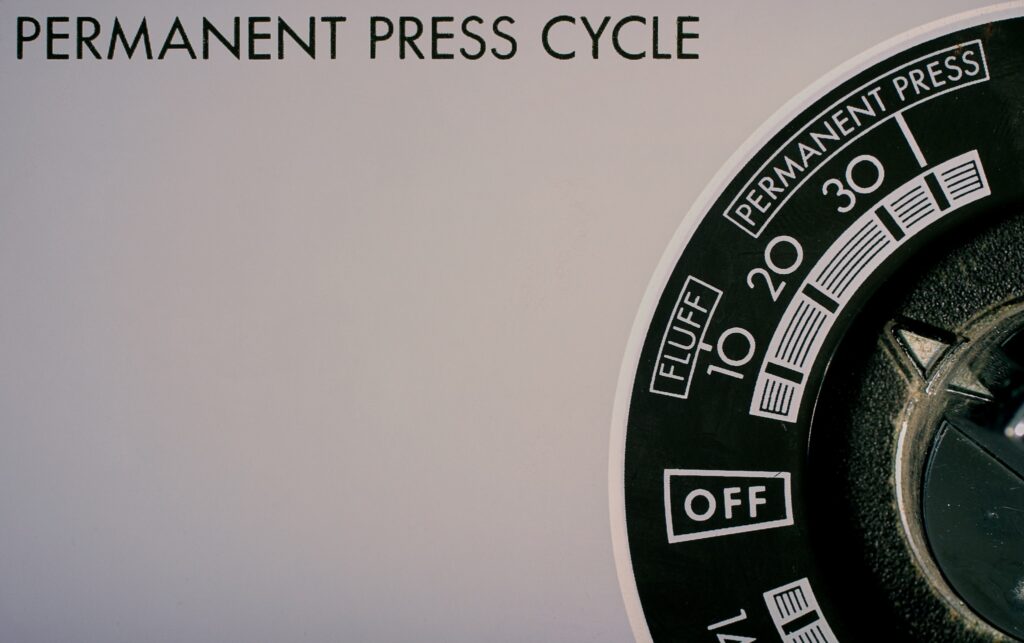
The term “permanent press” actually originates from the clothing industry. Mid-century clothing manufacturers developed “permanent press” fabrics – garments treated to resist wrinkles and hold their shape. Back in the 1950s and 60s, “wash-and-wear” shirts and pants (often blends of cotton and new synthetics like polyester) were sold as needing little or no ironing. As these wrinkle-resistant clothes became popular, appliance makers introduced a dedicated permanent press cycle on washing machines and dryers. In simple terms, a permanent press cycle is a wash or dry setting designed to prevent wrinkles from setting in. It’s sometimes labeled as the “Casual” or “Wrinkle Control” cycle on modern machines, but the function is the same: gentler treatment to keep fabrics looking smooth.
How does the permanent press cycle work?
In the washing machine
On the wash cycle, permanent press uses a warm water wash and a cooler rinse. Warm water helps relax fabric fibers and release creases, while a cool rinse helps avoid shrinking and sets the fabric to reduce new wrinkles. The machine also uses slower spin speeds and mild agitation during a permanent press wash. By washing less vigorously than a normal cycle, it prevents clothes from getting tightly twisted or bunched up. Even the final spin is gentler, so wet laundry isn’t plastered against the drum with force. All of this means your clothes come out of the washer less crushed and beaten up, which is the first step to a wrinkle-free finish.
In the dryer
The dryer’s permanent press setting continues the wrinkle-fighting process. Instead of the high heat of a normal dryer load, it uses a medium heat (around 135°F) to dry your clothes more gently. Importantly, most dryers with a permanent press or “wrinkle release” setting include a cool-down phase at the end. During this phase, the dryer tumbles the clothes with no or low heat for the last few minutes. This gradual cooling lets garment fibers relax back to their normal shape rather than stiffening into new creases. Think of it as a built-in safeguard: by the time the cycle stops, your shirts and slacks are warm (not hot) and less prone to wrinkling. This is why the permanent press cycle is often recommended if you want clothes wrinkle-free straight from the dryer – the cool-down phase prevents deep-set wrinkles you’d otherwise need to iron out.
When to use the permanent press cycle for wrinkle-free laundry
Permanent press is the go-to cycle whenever you want to minimize wrinkles on everyday laundry. It’s especially useful for synthetic fabrics and blends that tend to crease under high heat. For example, a dress shirt made of polyester/cotton blend or a pair of rayon slacks will emerge noticeably smoother on permanent press than on a hot, heavy cycle. Always check your clothing care labels: if you see terms like “wrinkle-resistant,” “no-iron,” or “permanent press,” those items are prime candidates for this cycle. In fact, laundry experts specifically recommend this cycle for synthetics and any “do not iron” labeled items to avoid unwanted creases. In practice, this setting is perfect for work attire and casual clothes that you’d like to wear without ironing.
- Polyester and poly-blend garments (such as polos, uniform shirts, or dress slacks) that need to stay smooth.
- Button-down shirts, blouses, and other office or school attire you want crisp without having to iron them.
- Clothes made from wrinkle-prone materials like rayon or modal, which benefit from gentler heat and agitation.
In short, use permanent press for moderately soiled loads of everyday clothes where wrinkle prevention is a priority. It’s not necessary for sturdy items like denim jeans or bath towels – those can handle (and often need) a stronger wash. But for your nicer outfits and any mixed-fiber garments, this cycle strikes a great balance. Just remember a couple of best practices: avoid overloading the machine (clothes need room to move if you want wrinkles to release) and promptly unload the dryer when the cycle is done. If you let a “wrinkle-free” load sit piled up in a still-warm drum, creases can settle back in, undermining the whole point.

Who benefits from using permanent press?
The permanent press cycle can be a real asset for anyone, but a few groups find it especially handy. If you’re a busy professional with a closet full of dress shirts, blouses, or uniforms, permanent press is your friend – it helps keep work clothes presentable with minimal effort. Instead of spending evenings ironing shirts for that big meeting, you can rely on the washer and dryer to do the wrinkle prevention for you. Likewise, families or households that are “wrinkle-averse” (or simply short on time) appreciate this cycle. It ensures school uniforms, everyday polos, and even nicer tee-shirts come out looking smooth.
Anyone with lots of synthetic fabric in their wardrobe will also see the benefit. Fabrics like polyester, nylon, rayon, and spandex are common in everything from athletic wear to business casual clothes, and while they’re durable, they can hold onto wrinkles if dried on high heat. Using permanent press means those gym shorts or poly-blend dresses dry without getting that crumpled look. Even older adults or those who find ironing difficult can benefit – clothes come out of the dryer ready to fold or hang as-is. Essentially, this cycle is for people who value convenience and appearance: it saves time (less ironing, re-washing, or steaming out creases) and keeps garments looking fresher. It’s one reason our clean-obsessed team often uses this setting when handling customers’ button-downs and blouses in our wash-and-fold service.
Permanent press vs. normal and delicate cycles
Think of permanent press as a middle ground between the regular “Normal” cycle and the ultra-gentle “Delicate” cycle. It’s tuned to avoid excessive wear and wrinkles, but it’s not the lightest wash available. Here’s how it stacks up against the other settings:
Compared to a Normal cycle
A Normal (or Cotton) cycle on most machines uses higher wash temperatures (often hot or very warm water), vigorous agitation, and a fast spin. In the dryer, Normal might use high heat and usually doesn’t include that extended cool-down tumble. This approach is great for heavy-duty cleaning – think sweaty towels, denim, or heavily soiled kids’ play clothes – but it can be harsh on fabrics that are prone to wrinkling. By contrast, the permanent press cycle uses a bit less muscle: warm water instead of hot, a slower spin, and medium heat drying with a cool-down. That means clothes won’t get as beat up or shrunken, and they’re far less likely to come out with set-in wrinkles. If you’ve ever run a mixed load on Normal and found your cotton shirts terribly creased, switching to permanent press is an easy fix.
It’s worth noting that because permanent press is gentler, it may not fully clean heavily stained or very dirty items as effectively as a Normal cycle would. For everyday dirt and light stains it’s fine – a good detergent in warm water will handle those. But for something like muddy jeans or deep-set odors, you might need the stronger agitation and longer wash time of a regular or heavy cycle (or even a specialized sanitize cycle if hygiene is a concern). In summary, use Normal for sturdier fabrics and heavy soil, and use permanent press for your average load of office, school, or casual clothes where preserving fabric and appearance matters more.
Compared to a Delicate cycle
While permanent press is gentler than Normal, it’s not as delicate as the Delicate cycle. The Delicate setting (sometimes called “Hand Wash”) typically uses cold water and the slowest agitation and spin speeds to barely stir the clothes. It’s meant for very fragile items like silk blouses, lace lingerie, or sweaters that could stretch or snag easily. Permanent press, on the other hand, still uses warm water and a moderate spin, so it provides more cleaning action. It’s ideal for wrinkle-prone everyday fabrics, but it may be too rough for true delicates. For example, a sequined top or a lace bra should still go on Delicate or be put in a mesh bag – permanent press might agitate just a bit too much for those. Also, the dryer’s Delicate setting uses even lower heat (or just air fluff), which some fabrics require. So, you wouldn’t want to dry a wool sweater on permanent press heat, but you could wash and dry a cotton-blend dress on permanent press with no issue. In short, if the care label says “gentle” or “hand wash,” stick to Delicate. Save permanent press for the clothes in between – not sturdy enough for Normal, not fragile enough for Delicate.
Commercial laundromat machines vs. home machines
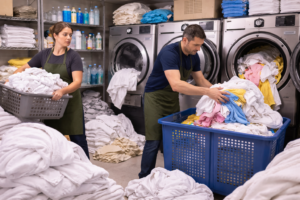
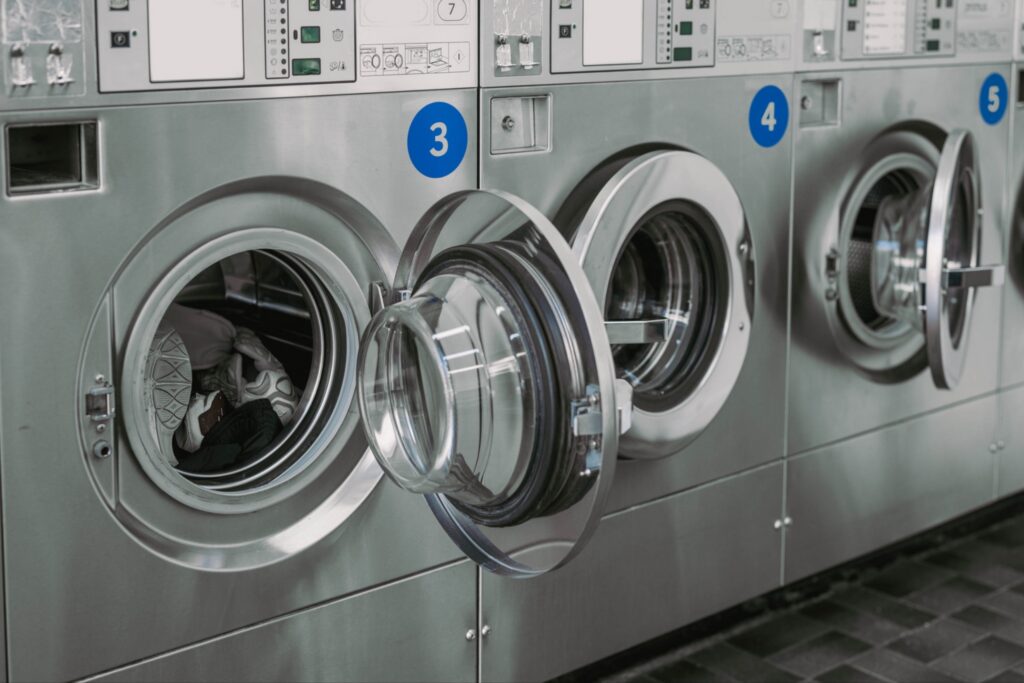
Does using permanent press at a laundromat yield different results than at home? It can. Commercial-grade washers and dryers (like the ones in our self-service laundry) are built to handle big loads and maintain settings consistently. One advantage is drum size: a larger washer drum gives clothes more room to circulate, which helps prevent them from wrinkling in the first place. In a small home washer, if you fill it to the brim, the clothes have less space and can bunch up – even on permanent press, overcrowding will create wrinkles. Our laundromat washers have huge capacities (we even have a 14-load machine), so customers can wash bulky or large loads on permanent press without cramming everything in. More space means garments come out looser and less creased.
Another advantage is temperature control. Home machines often rely on household hot water supply for “warm” settings, which can fluctuate. Commercial machines are generally calibrated for optimal wash temps and consistent medium dryer heat. So the “warm” wash at a laundromat might be more precisely warm (not lukewarm) and the dryer holds a steady medium heat. This consistency helps ensure the permanent press cycle works as intended every time. Plus, commercial dryers usually have robust airflow and automatic cool-down periods. That’s why your clothes at a good laundromat might feel just-right dry and relatively wrinkle-free. In contrast, some older home dryers may run either too hot or cut off without a cool tumble, leaving clothes hot and static – a recipe for wrinkles once they cool down in a heap.
In practical terms, if you don’t have a permanent press option at home, or if you have a lot of garments you want done right, consider using a commercial machine. Many of our Chicago neighbors bring in business attire or large loads of poly-blends to wash on permanent press in one go. You can do it yourself at our facility, or save even more time by scheduling a pickup and delivery laundry service so we handle it for you. Either way, you’ll get the benefit of professional equipment that keeps temperatures and tumbles in the sweet spot for wrinkle-free results.
Gentle on clothes, tough on stains
A common concern is whether using a gentler cycle like permanent press means sacrificing cleanliness. The good news: with today’s detergents and proper sorting, permanent press gets clothes clean while still being kind to the fabric. The warm water wash is effective at removing everyday dirt and light stains, especially if you use a quality detergent (most modern formulas are engineered to work well in cooler temperatures too). Meanwhile, the moderated agitation and heat help preserve your clothing’s shape and color. Colors stay brighter because they aren’t subjected to scalding hot water, and fabrics are less likely to fade or bleed. The reduced spin speed and tumbling also cut down on friction, so you’ll see less pilling and wear on your garments over time.
Crucially, permanent press can eliminate odors and freshen garments without beating them up. If you have smelly gym clothes made of synthetics, for instance, a permanent press wash in warm water will lift the odors, and the gentle dry cycle will not bake those smells in (which can happen if you overdry on high heat). For tough stains, you can pre-treat or use a booster, then trust the cycle to do its work. In our experience at Spincycle, using the right cycle is part of treating clothes with respect – and the permanent press setting is a perfect example. It hits that sweet spot: garments come out clean, smelling fresh, and looking well-kept, all without the undue stress of harsher cycles.

Bottom line: The permanent press cycle is an easy way to get wrinkle-free laundry while extending the life of your clothes. It’s a “set it and forget it” option for many everyday items – just choose the setting and let your washer and dryer automatically adjust the temperature and spin for optimal fabric care. The result is less time ironing and more time enjoying your day. Next laundry day, give permanent press a try on those shirts and slacks that always crease, and you’ll likely be pleasantly surprised by the ready-to-wear results. And if you’d rather not deal with laundry at all, we’ve got you covered there too – our team is happy to handle the washing, drying, and folding for you, delivering your clothes drawer-ready and wrinkle-free.