
Laundry vs. Dry Cleaning
Many people are confused about laundry vs dry cleaning and when to choose each method for their clothes. This confusion is understandable – not every garment needs the same care, and choosing the wrong cleaning method can lead to shrunken sweaters or ruined fabrics. Understanding the difference between laundry and dry cleaning and when to choose each is essential to keep your wardrobe looking its best (and to avoid expensive mistakes). In this guide, we’ll act like that clean-obsessed neighbor who’s here to help you sort it all out.
The core difference between laundry and dry cleaning
The biggest difference between laundering and dry cleaning comes down to water. Traditional laundry uses water and detergent to clean clothes, while dry cleaning uses a chemical solvent (no water) to lift dirt and stains. Your clothes get agitated and rinsed in a washing machine during laundry, but in dry cleaning they’re gently tumbled in a special machine with solvent, then dried and pressed. This fundamental water-versus-solvent difference affects everything from how stains are removed to how the fabric fibers respond. In short, laundry is great for most everyday clothes, and dry cleaning is reserved for materials that might be damaged by water.
Knowing this difference can actually extend the life of your clothes – for example, dry cleaning avoids water damage on delicate fabrics, while laundering is better at flushing out grime from sturdy items. Ultimately, each method has its place. Next, we’ll look at which clothes truly need dry cleaning and which can go through a normal wash.

What clothes need dry cleaning?
How do you know if something really needs the dry cleaner? Start by checking the care label. If it says “Dry Clean Only”, it’s best to follow that advice. That label means the manufacturer believes dry cleaning is the only safe way to clean the item without damage. You’ll typically see this on expensive or structured pieces and delicate materials. Here are some common clothes that usually require professional dry cleaning:
- Suits, blazers, and lined jackets: Structured business wear holds its shape better with dry cleaning and pressing.
- Silk, wool, and cashmere garments: Natural fibers like these can shrink, distort, or lose texture in water. Dry cleaning avoids harsh soaking that could hurt the fabric.
- Clothing with delicate embellishments: Items with beads, sequins, or intricate lace are safer in dry cleaning. The gentle solvent process won’t loosen adhesives or fray fine detailing the way a washing machine might.
In short, lean toward dry cleaning for anything high-value, delicate, or structured. Water can cause wool and silk fibers to tighten or shrink, and it can dissolve glues or finishes on specialty items. Dry cleaning is a way to be safe rather than sorry for these pieces. (If a tag simply says “dry clean” without “only,” that usually means it’s the recommended method but not the only option – you might get away with gentle hand washing, though you do so at your own risk.)

What fabrics can be machine washed?
Fortunately, the majority of everyday clothes can be washed with water. Your closet is probably full of items that do just fine in the washing machine. Generally, sturdy or synthetic fabrics are machine-washable without issue. Always double-check the tag, but here are some examples of what you can toss in the wash:
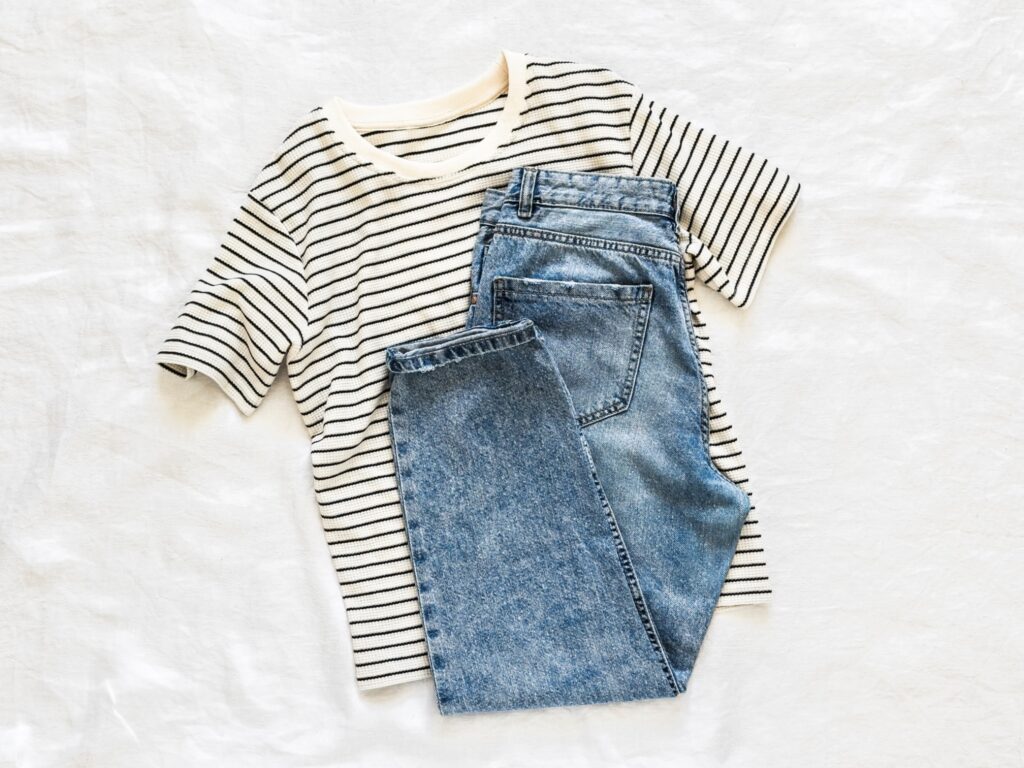
- Cotton and linen: Everyday natural fibers like cotton T-shirts, denim jeans, socks, and bed linens thrive in water. These casual staples are made to handle regular washing and drying.
- Synthetics (polyester, nylon, etc.): Most synthetic blends and activewear fabrics are designed for machine wash. They’re durable and resist shrinking. Turn gym clothes and polyester blouses inside out, wash in cool water, and they’ll come out fresh.
- Durable everyday wear: Items like khakis, uniforms, baby clothes, and pajamas are usually laundry-safe. If it’s something you’d wear on a typical day (and it doesn’t have special trim or fabric), chances are it belongs in the wash rather than the dry cleaner.
Even some garments that feel delicate can often be washed gently at home – for instance, many wool or cashmere sweaters can be hand-washed in cold water and laid flat to dry, despite their luxe reputation. The key is to read the care symbols and use best practices for laundering. Simple steps like sorting whites separately and treating stains promptly will keep machine-washable fabrics in top shape. With the right care, your cottons and polyesters will stay bright, soft, and ready for daily wear.
Dry clean laundry symbols to know
Those little hieroglyphics on your clothing tags can be confusing. To quickly tell if you should dry clean or wash an item, look for a few key laundry care symbols on the label. Here’s a brief cheat sheet of symbols related to dry cleaning vs. washing:
- Circle: A plain circle on the care tag means the garment is suitable for dry cleaning. (If there’s a letter like “P” or “F” inside, that’s just information for the professional cleaner about which solvent to use.) In general, a circle implies “dry clean recommended.”
- Washtub with an X: A symbol of a little wash bucket crossed out indicates “do not wash” in water. In practice, this is the same as saying “dry clean only” – the item shouldn’t go through a conventional wash. When you see the X’d out washtub, plan on dry cleaning the item.
- Hand wash icon: If you spot a hand dipping into a bucket, the manufacturer is telling you to hand wash that item (and not to machine wash it). This often appears on delicate sweaters or lace. It means you don’t have to dry clean, but you should wash very gently by hand. It’s a good middle ground symbol that helps you avoid unnecessary dry cleaning if a careful home wash will do.
Of course, some tags will cut right to the chase and simply state “Dry Clean Only” or “Machine Wash Cold.” When in doubt, follow those explicit instructions. The symbols above are just a quick visual guide to help you decide at a glance.
Why choosing the wrong method can backfire
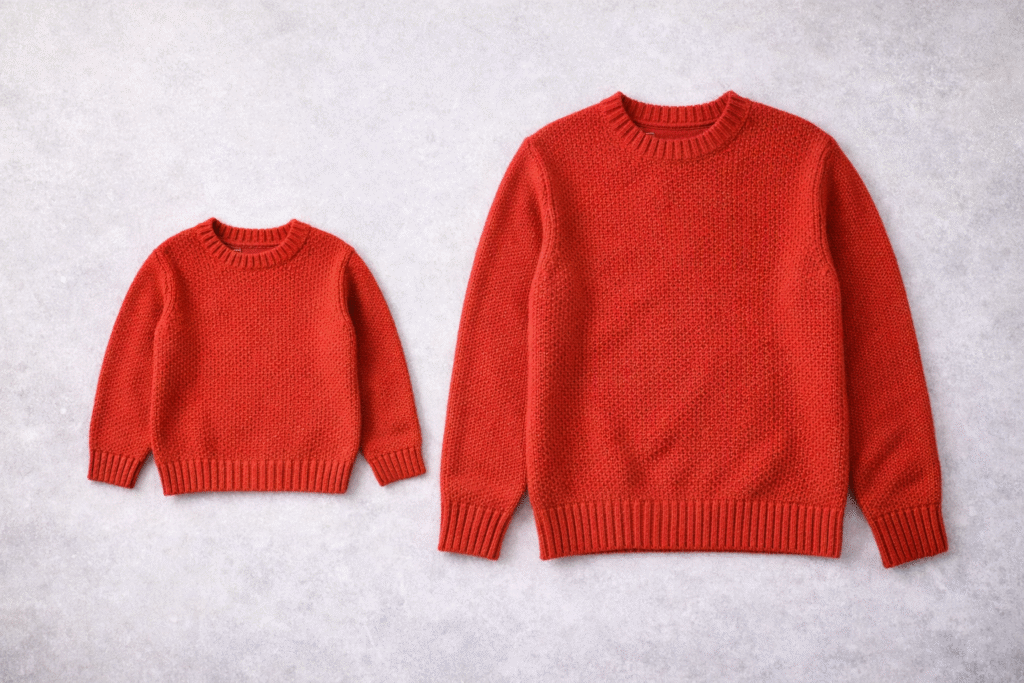
Selecting the wrong cleaning method for a garment isn’t just a harmless mix-up – it can permanently damage your clothes or leave them less clean than you’d hoped. One common issue is shrinkage: put a wool sweater that needs dry cleaning into the washing machine, and you might pull out a miniaturized version fit for a child. Hot water and agitation can make wool and other animal fibers (like cashmere) felt and shrink dramatically. Similarly, silk can lose its smooth texture or get water spots if washed when it really needed gentle dry cleaning.
Stains are another area where the laundry vs dry cleaning decision matters. Different stains respond better to different treatments. For example, oil-based stains (think salad dressing, motor oil, or lipstick) usually come out more easily with dry cleaning solvents that dissolve oils. If you only ran such a stain through a normal wash, you might still see a grease shadow on the fabric. On the other hand, water-based stains like sweat, coffee, or mud tend to wash out better in a water laundry process. Try to dry clean a heavily sweat-stained shirt and you might find the odor or yellowish tinge still there, since dry cleaning solvent isn’t as effective on those water-based grime and odors. Using the wrong method can mean a stain sets in further or doesn’t come out at all.
Beyond stains and shrinkage, using the wrong cleaning method can lead to color bleeding or fabric distortion. Washing a brightly colored dress that should be dry cleaned could cause dyes to run, ruining not just that dress but any other clothes in the load. And some garments (like structured jackets) can lose their shape or crispness if submerged in water. In short, that little care label is there for a reason. Ignoring it may save you a trip to the cleaners in the short term, but it can shorten the lifespan of your clothing. When in doubt, err on the side of caution — it’s better to pay for one proper cleaning than to replace a beloved piece of clothing.
Cost of dry cleaning vs laundry: time, money, and convenience
Let’s talk about the practical costs. Dry cleaning and laundry differ not only in method, but also in how you pay for them (and the time you spend). Generally, dry cleaning costs more money per item but might save you personal effort, whereas doing laundry (especially at home) costs less money but more of your time. Dry cleaners typically price by the piece — each shirt, dress, or suit has an individual cost (often to cover the specialized solvent and hand-finishing required). In contrast, laundry services usually charge by the pound or by the load. For example, instead of paying $10+ to dry clean a single dress, that same $10 could cover a whole week’s worth of T-shirts and socks in a wash & fold service load. We at Spincycle keep pricing fully transparent: our wash & fold laundry is priced by the pound with a modest minimum, so you know you’re paying based on the actual laundry you send in, not a surprise per-garment fee.
There’s also the question of convenience and time. If you do laundry yourself at home, you invest time sorting, washing, drying, and folding. That’s time you could spend elsewhere (we’re laser-focused on saving our customers time, because we know your hours are valuable). Dry cleaning a garment means you drop it off and pick it up later, which saves you the washing time but often entails a day or two turnaround and a special trip to the cleaners. With a laundry service, especially one that offers pickup and delivery, you can save even more time. You hand off a bag of dirty clothes and get them back clean without ever leaving the house. In short, laundry services can be a time-saving and cost-effective alternative for everyday clothes, whereas dry cleaning is an investment you make for those special items that truly need it.
When to choose wash & fold or pickup & delivery instead
So, you’ve figured out your garment isn’t “dry clean only” – it’s a machine-washable fabric. Does that mean you must spend your Sunday doing laundry? Not at all. This is where convenient options like a drop-off wash & fold service or scheduling a pickup & delivery come in. Busy professionals, parents, and anyone short on free time can appreciate the beauty of these services. If your clothes are laundry-safe but you don’t have the hours (or desire) to wash and fold a giant pile of clothes, you can outsource it to a trusted team. Essentially, choose wash & fold or pickup service when you want the ease of dry cleaning (no work on your part) applied to your regular laundry. Your everyday shirts, socks, gym clothes, and sheets can be cleaned for you, freeing you up to focus on more important or fun things than sorting loads.
Think of it this way: use dry cleaning for the specific pieces that need that solvent treatment, but for everything else, a professional laundry service can handle it more affordably. Rather than paying high dry clean prices for a dress shirt that could be washed, you can send that shirt to a wash & fold and get it back crisp and clean. And rather than lugging laundry bags to a laundromat or spending evenings doing laundry at home, you can have a van swing by to pick up your laundry while you relax. It’s about choosing the right tool for the job – and if the “tool” is a friendly laundry service, you get convenience without the premium per-garment cost.

Wash & fold and self-service laundry for everyday clothes
At Spincycle, we’re proud to be a neighbor-approved, Chicago-owned shop that offers solutions for all those laundry-safe items in your life. Our wash & fold service is perfect when you want to trade laundry day for free time. You can drop off a heap of clothes (or have us pick it up) and know that each item will be washed, dried, and neatly folded with professional care. We never mix your laundry with anyone else’s, and each order gets individual attention. In fact, our team reads the care labels on your clothes so nothing is cleaned the wrong way. Every load is even ozone-sanitized for an extra level of cleanliness. When your laundry comes back, it’s fresh, fluffy, and folded into drawer-ready folds — ready to go straight into your dresser. It’s like having a magic laundry fairy, except it’s your friendly local laundry experts (and we don’t charge fairy godmother prices, either).
We also offer self-service laundry at our facility for those who prefer a DIY approach but with better equipment and environment than your basement washer. Our laundromat is clean, welcoming, and outfitted with high-capacity washers that can handle anything from a small load to a mountain of towels. You’ll find Chicago’s largest machines here — great for big items like comforters that won’t fit in a typical home unit. Even if you’re doing it yourself, we’re here to make laundry less of a chore: you can pop in, toss your clothes in our modern washers (grab a cup of coffee or use our free Wi-Fi while you wait), and be on your way with clean clothes in a fraction of the time. And if you ever need help or have questions, real people (our attendants) are on hand to assist — it’s all part of that warm, neighborly touch.
Dry cleaning vs. laundry isn’t an either-or battle — it’s about using each when appropriate. Keep the dry cleaner for your suits, silks, and special garments, and let a quality laundry service handle the rest. By knowing the difference and making smart choices, you’ll protect your clothes, save time, and spend less. And whenever laundry starts piling up or an item leaves you scratching your head, remember that your clean-obsessed neighbors at Spincycle are always here to help, whether it’s with expert advice, a convenient wash & fold service, or a speedy pickup of that laundry bag sitting by your door. Happy cleaning!