How to Wash Down Coats and Puffer Jackets at Home Without Clumping
Chicago winters demand a good puffer jacket – but after a season of snow, slush, and daily wear, even the warmest down coat needs a wash. If you’ve been avoiding cleaning your down coat for fear of clumping or damage, take heart: you can absolutely wash a down coat at home without turning it into a lumpy mess. It’s all about using the right technique and the right laundry detergent for down coats. In this guide, we’ll walk through each step, from checking the care label to drying with patience, plus how to fix clumps and when it’s time to call in the pros for help.
Start with the label: Know what your coat can handle
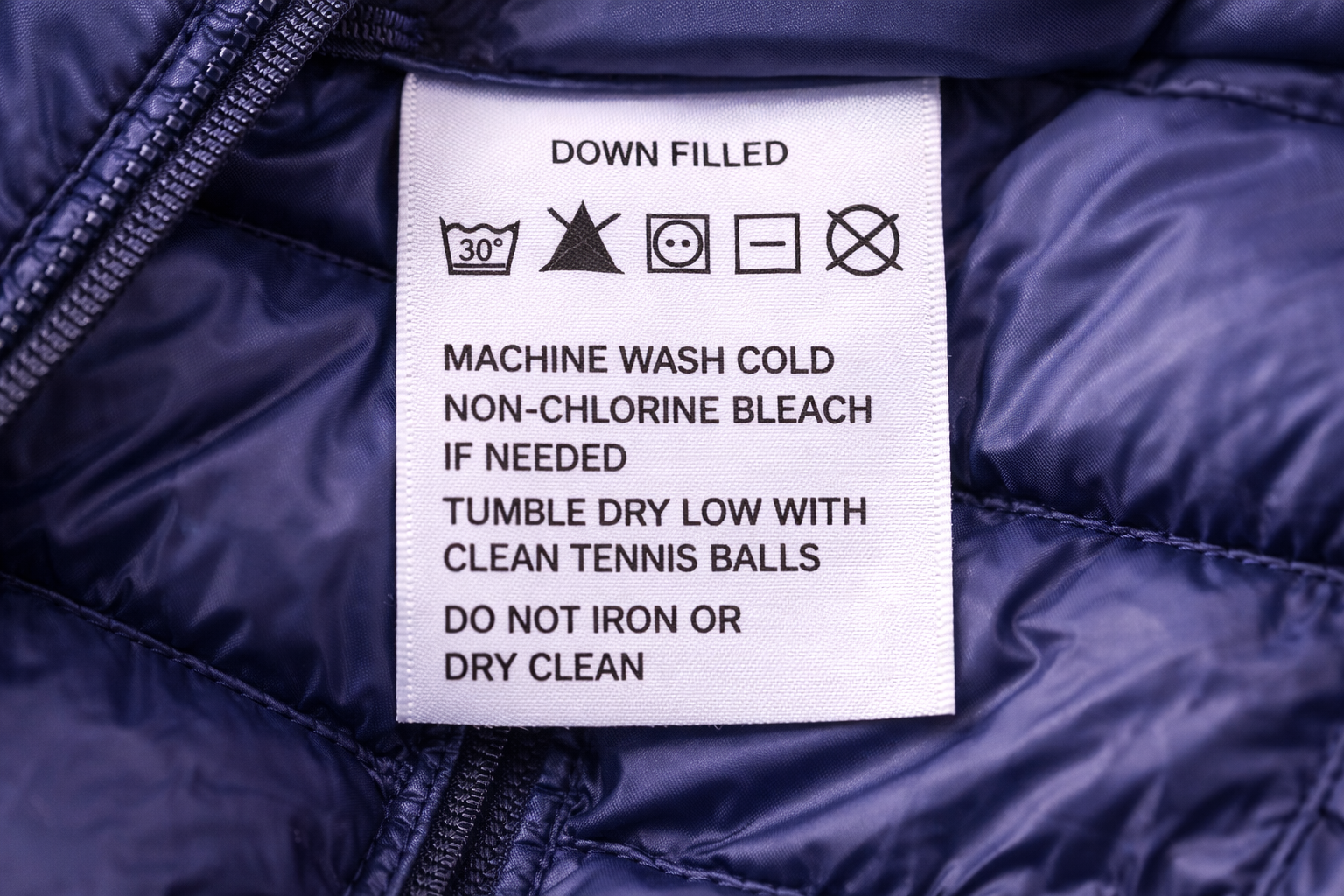
Before anything else, read the care label inside your down coat. That little tag is your coat’s instruction manual. It will tell you the fabric content (down fill, shell materials) and how the manufacturer recommends cleaning it. Many down jackets are machine-washable, but some might say “hand wash only” or even “dry clean only.” Pay close attention to any specific instructions or symbols on the label.
The label often includes laundry symbols for guidance. For example, a tub icon means the item can be machine washed, usually with a number or dots indicating the water temperature. A triangle symbol relates to bleach (an “X” over it means no bleach), and a square with a circle inside means tumble dry (with dots for heat level). If those symbols look like hieroglyphics, don’t worry – consult a laundry care symbols guide to decode them. The key point is to follow what the label says. If it explicitly says “dry clean only” (or shows a circle symbol indicating dry clean), that’s a sign you may want to skip the home wash and let a professional handle it. But if it indicates the coat is machine washable, you’re clear to proceed with confidence (using the gentle steps below). Remember: the label’s advice is tailored to your coat’s materials, so it’s the best starting point.
Prep smart: Zip, empty, and spot treat
Once you’ve confirmed your coat can be washed, take a few minutes to prep it properly. Down coats need a bit of TLC before they hit the water. Here’s how to get yours ready:
- Empty all the pockets: Check every pocket and remove anything inside. Bits of tissue or receipts can shred and create a mess in the wash, so make sure the coat is empty.
- Zip up and fasten closures: Zip the main zipper, close any snaps or buttons, and fasten Velcro straps. If your jacket has a removable hood or fur trim, detach it now (those can often be washed separately by hand or require different care). Securing everything keeps the jacket from snagging or twisting on itself during washing.
- Spot treat stains: Inspect the jacket for any obvious stains or heavily soiled areas – common spots are the collar (from skin oils) or sleeve cuffs. Apply a small amount of mild detergent (or a down-safe stain solution) to those areas. Gently rub the fabric together or use a soft brush/toothbrush to work the solution in. Let it sit for about 10-15 minutes before washing. This pre-treatment helps loosen grime so the wash will be more effective.
If your coat is especially dirty all over, you can also do a brief pre-soak. Fill a tub or sink with cool water and a little bit of down-specific detergent, and let the jacket soak for 30 minutes. This ensures the down is fully wetted and starts removing deep dirt. After soaking, drain the water and gently press out excess water (don’t wring the coat) – then it’s ready to go in the washer.

The best laundry detergent for down coats
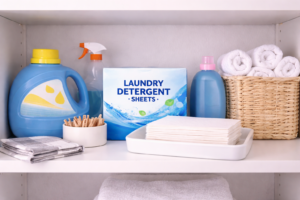
What detergent is safe for down jackets? In short, one that’s gentle and leaves no heavy residue. Down feathers are not like regular laundry – they have natural oils that help them stay lofty and warm. A harsh detergent can strip those oils and cause the down to clump or flatten. The best laundry detergent for down coats is a specialty down detergent or “down wash.” Products like Nikwax Down Wash or Granger’s Down Wash are designed specifically for down-filled items. These cleansers are formulated to clean gently without adding fragrances, brighteners, or fabric softeners that could coat the feathers. They also rinse out easily. Using a down-specific detergent helps maintain your jacket’s loft and any water-resistant treatments on the fabric.
If you don’t have a bottle of down wash on hand, use a mild, scent-free liquid detergent – ideally one meant for delicate fabrics. Choose an HE-compatible detergent (high-efficiency) if you have an HE machine (most front-loaders are); that just means it’s low-sudsing and will rinse out more effectively. With any detergent, less is more here. You only need a small amount (often just a couple of capfuls for a coat – check the detergent’s directions). Too much soap can be hard to rinse out, leading to – you guessed it – clumping.
Crucially, fabric softener is a no-go for down coats. Never add liquid fabric softener or dryer sheets when washing or drying your down jacket. Why? Softeners leave a waxy coating that will cause the down clusters to stick together and lose loft. They can also interfere with the jacket’s breathability and water-repellency. The same goes for bleach – it’s far too harsh for your coat’s material and can damage both fabric and feathers. So stick with a gentle wash and skip the additives. (Pro tip: If you’ve ever used regular detergent or softener in your machine, it’s wise to run an empty rinse cycle beforehand or wipe out any residue in the detergent dispenser. This prevents those leftover chemicals from contacting your down coat during the wash.)
How to wash a down puffer jacket in a front load washer without clumping
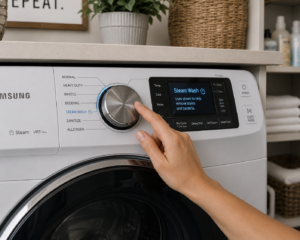
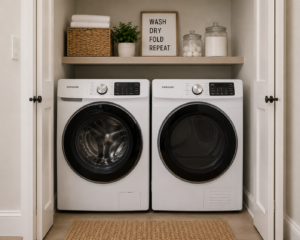
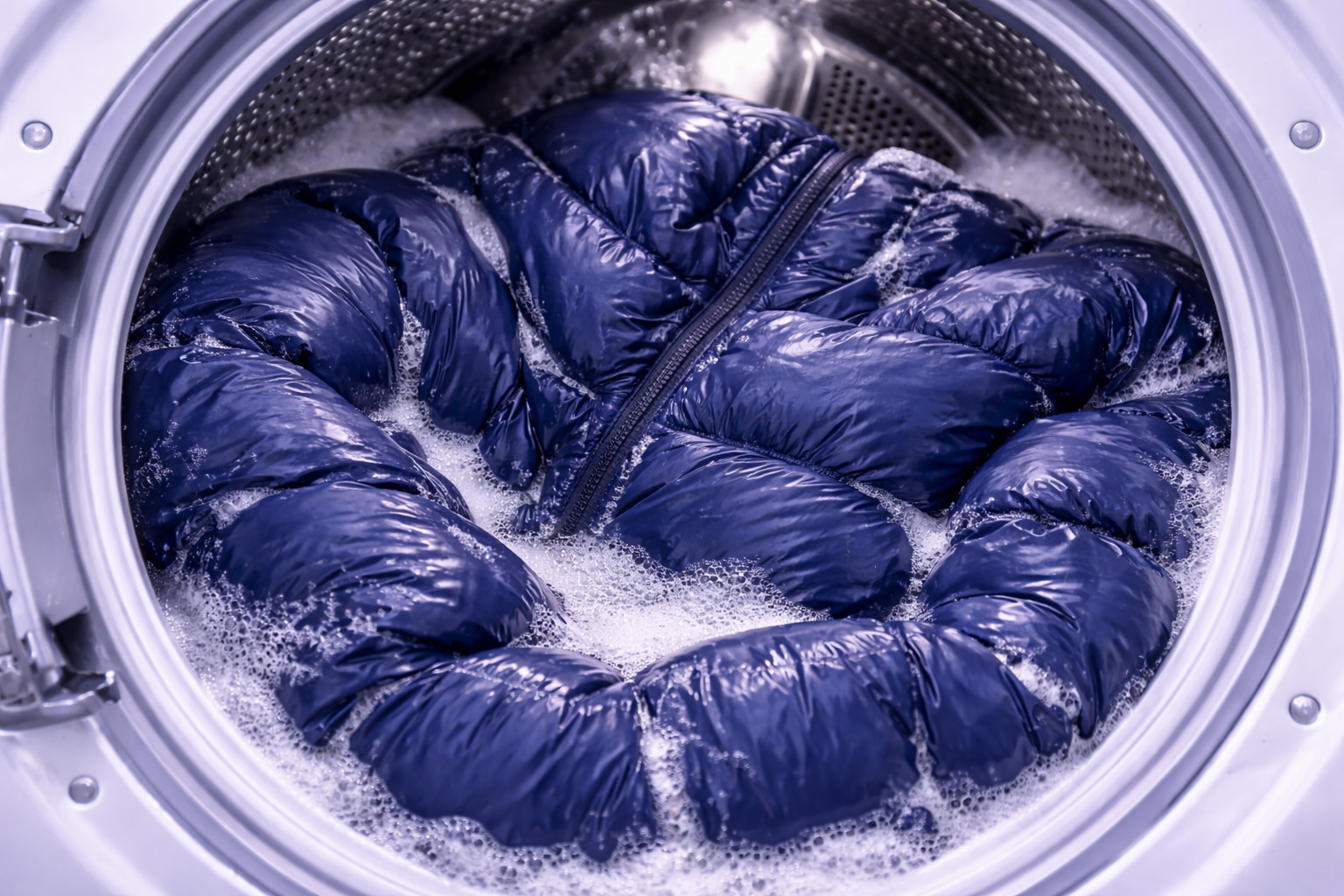
Now for the main event: washing your down puffer. The ideal setup is a front-loading washing machine on a gentle cycle. Front-load washers are preferred because they tumble laundry instead of agitating it with a central pillar. That tumbling action is much gentler on a bulky down coat. It minimizes the stress on the fabric and keeps the feathers from getting thrashed (which can lead to clumping or even tearing of the quilted baffles inside the jacket). If you only have access to a top-loading washer with an agitator, you might want to head to a laundromat for this load. (Many top-loaders without agitators, or newer high-efficiency top-load models, are gentler – but a classic agitator can rough up your coat.) When in doubt, use a front-loader. Our self-service laundry in Chicago, for instance, has plenty of high-capacity front-loading machines that are perfect for jobs like this, so you’re not out of luck if your home machine isn’t ideal.
Set the washer to a delicate or gentle cycle. Use cold water (or warm at most, if the care label specifies – but cold is the safest bet to avoid any shrinkage or damage to fabric coatings).
Before tossing the coat in, double-check that you’ve closed it up (zippers, flaps, etc., as discussed earlier) and removed any detachable pieces. It’s usually best to wash the coat by itself to give it room to move freely. If the drum looks too empty and you’re worried about balance, you can throw in a couple of clean, color-safe towels to help even out the load – but avoid adding heavy garments or a large load of clothes alongside the jacket.
Pour in the down-specific detergent you prepared (or mild detergent). Use the amount recommended – typically a small amount since the load is not huge. If your machine has an option for an extra rinse, select it (or you can run a separate rinse cycle after washing). A thorough rinse is critical; leftover soap in the down can cause clumping and reduce fluffiness. The gentle cycle will run slower spin speeds than normal, which is gentler on the coat. However, down holds a lot of water and will come out dripping. To counter that, once the main wash is done, you can run one extra spin cycle (just a spin, no water) to pull out more water from the coat. This helps speed up drying and further prevents the down from pooling water (which can lead to clumps).
When you take the coat out of the washer, don’t panic if it looks deflated, uneven, or flat. Wet down clumps together and the jacket will appear misshapen – that’s expected at this stage. The key to washing a down jacket without clumping lies not just in the washing step, but in the next step: drying it correctly. So carry your soggy puffer carefully (support its weight from underneath – wet down is heavy) and let’s move on to proper drying.
Drying down: Low heat, dryer balls, and patience
Drying your down coat is where the magic happens – or, if done wrong, where clumping can really become an issue. The goal is to dry the jacket thoroughly while restoring its fluffy loft. Here’s how to dry a down coat without ruining its loft:
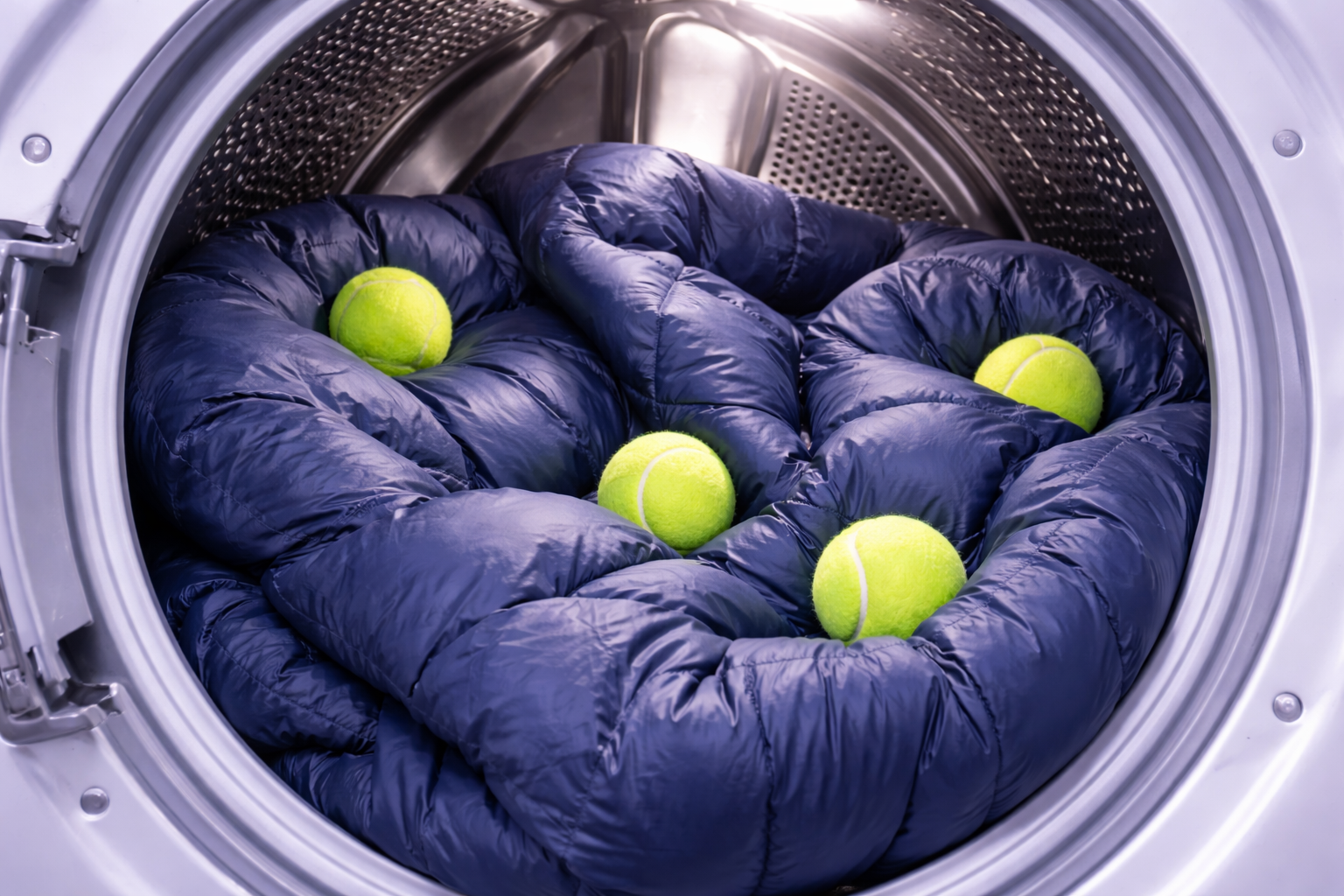
Use a low heat setting in your dryer. Place the washed jacket into a dryer (preferably a roomy one – a commercial dryer at a laundromat works great if your home dryer is small). Add in a few friends: specifically, 2 to 3 clean tennis balls or dryer balls. Drying a down puffer with tennis balls is a tried-and-true trick. As the dryer drum turns, the balls bounce around and continually hit and fluff the jacket, breaking up any clumps of wet down inside. This action helps redistribute the feathers and brings back the coat’s loft. Make sure to set the dryer on low heat or “air dry” if your dryer runs hot. High heat can scorch or melt parts of the jacket (many down coat shells are nylon or polyester that can warp under high heat). Low heat takes longer, but it’s safe and effective.
Be patient and check periodically. Turn on the dryer and let it run for about 20-30 minutes, then pause it and pull out the jacket. It will probably still be damp and clumpy at this point. Give the coat a good shake and use your hands to gently massage any clumps you feel, breaking them apart. You can fluff the jacket by hand, tugging at the clumped sections of down to loosen them. Then toss it back in the dryer and repeat. It often takes a few cycles (potentially an hour or two total) to get a down coat completely dry and fluffy. This is normal – down is insulating, which means it holds onto moisture for a long time. Keep going until the jacket is fully dry.
How do you know it’s fully dry? The coat should feel light, puffed up, and evenly filled out with no cold, damp spots inside the chambers. Any residual dampness and the down may clump back together later or even develop mildew. So err on the side of extra drying time. Continue with low heat until you’re confident all moisture is gone. Also, avoid using dryer sheets during this process (for the same reason as liquid softener – you don’t want any waxy residue on the down or fabric). If static cling is a concern, wool dryer balls typically help reduce static without chemicals. In a large dryer with a couple of tennis balls and low heat, your coat will slowly regain its loft. The patience will pay off when you pull out a fully fluffed, like-new puffer jacket.
One more tip: if you don’t have a dryer or prefer not to use one, you can air dry a down coat, but it requires even more patience and effort. Lay the coat flat on a drying rack in a well-ventilated room and come back to flip and fluff it frequently (like every hour) to break up clumps. It can take days to air dry completely. Tumble drying on low is usually much more effective at reviving the loft. If you’re concerned about your dryer’s size or heat, using a laundromat’s large dryer for this step can be wise. A bigger dryer gives the jacket more room to tumble, and you can always set it to a no-heat or low-heat setting. In short: low heat, dryer balls, and time are the ingredients for a clump-free, fluffy result.
How to fix clumpy down after washing
What if you’ve washed and dried your coat, and it still feels like the down is uneven or lumpy in places? Don’t worry – clumpy down after washing is not the end of the world. It just means some feathers are sticking together, usually because they haven’t fully dried or there’s a bit of soap residue. Here’s how to fix a clumpy down jacket:
Put it back in the dryer with dryer balls and keep going. The most common reason for clumps is incomplete drying. Even if the outer fabric feels dry, the down in the thickest parts (like the shoulders or collar) might still be slightly damp. Toss the jacket back into the dryer on low heat, add those tennis balls or dryer balls again, and run it for another 30 minutes or so. Often, an extra drying cycle will finish the job and break up the remaining clumps. Pause a couple of times to shake out the jacket or manually separate any stubborn clump you can locate by feel.
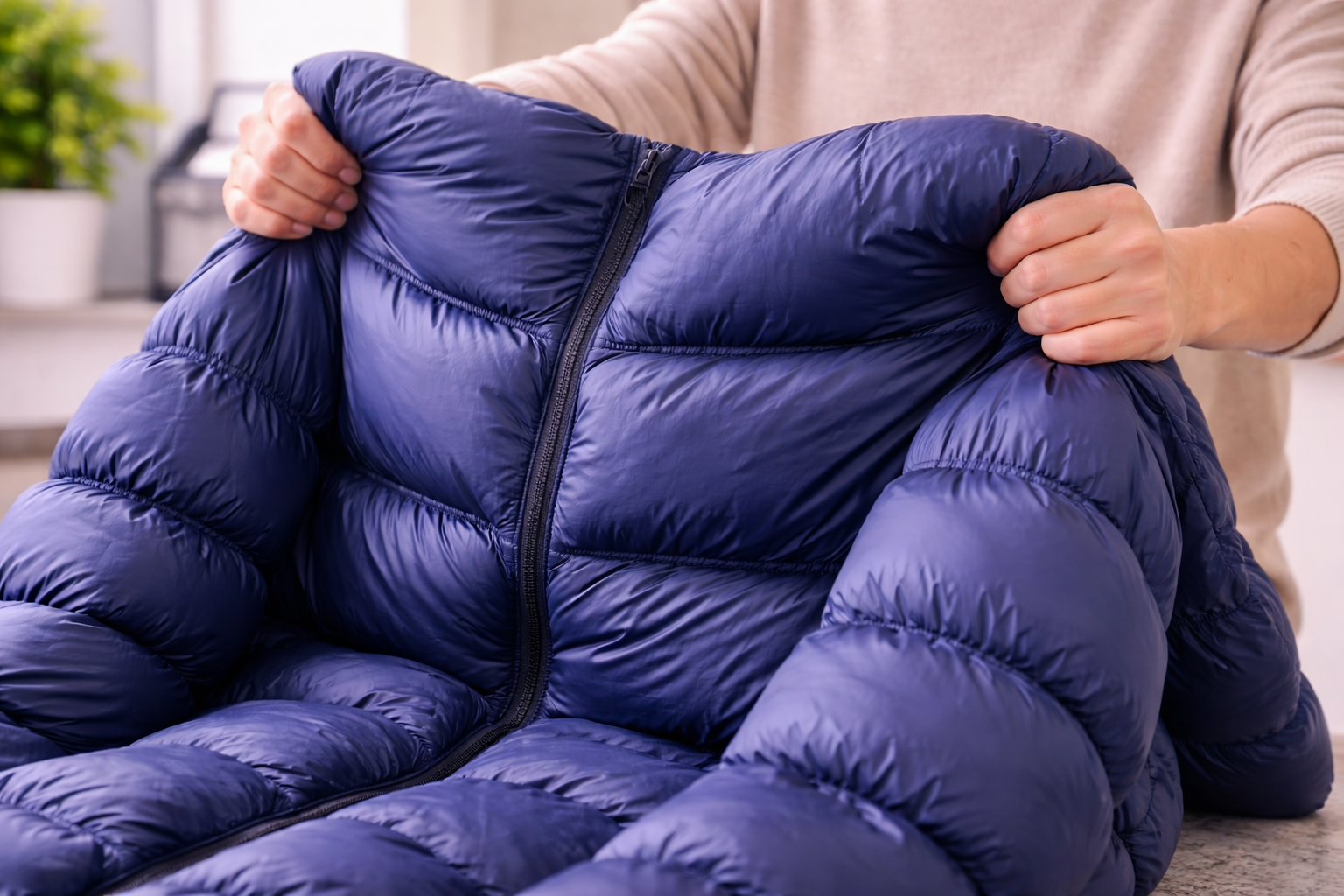
Manually fluff and shake. After or between drying cycles, take the coat out and give it a vigorous shake. Grab it by the shoulders and shake it like you’re fluffing a pillow. You can also beat it lightly (maybe against your forearm or a clean surface) to loosen the down. Massage the lumpy sections with your fingers to redistribute the down within its baffles. This physical agitation helps the clusters of feathers unlock from each other.
If the clumping issue was caused by using the wrong detergent or not rinsing well (for example, if you accidentally used regular detergent or fabric softener and now the down feels sticky or coated), you may need to rinse the jacket again. A quick remedy is to run the jacket through another wash cycle without detergent (or a rinse-only cycle) to flush out any residues. Then proceed to dry it again thoroughly as described. In some cases, people also use a specialty product like a down re-proofer after washing (which restores water-repellency), but that’s optional and mainly for outer fabric performance rather than clump prevention.
The core principle is to get the down dry and separated. Once you’ve done that, your coat should regain its familiar fluffy feel. As a final check, look at the jacket against the light – you should see an even distribution of down, not masses of it stuck in one corner of a compartment. Feel for any dense lumps; if found, target those for more fluffing and drying. And remember, sometimes it just takes a little extra time. Down that’s been wet for a while might need a bit of coaxing to fully expand again, but it will.
When to let the pros handle it
Home washing works well for most down coats, but there are definitely times when you might prefer to hand the job off to professionals. Knowing when to DIY and when to rely on a service can save your jacket and your peace of mind. Here are a few scenarios where letting the pros handle it makes sense:
Stubborn “dry clean only” cases or delicate trim. If that care label had the dreaded “dry clean only” instruction, or if your coat has elements like genuine fur trim, leather accents, or intricate stitching, a professional cleaner is the safer bet. They have solvents and methods to clean without water (or specialized wet-cleaning techniques) that won’t ruin those materials. Rather than risk an expensive parka on a trial-and-error at home, you can take it to a cleaner who knows exactly how to treat it. The same goes for any down item that’s antique or extremely valuable to you – sometimes the extra cost is worth the peace of mind.
No suitable washer/dryer at home. Perhaps you don’t have access to a front-loading washer, or your dryer is too small to allow that puffer to tumble freely. Maybe you live in a city apartment with coin-operated machines that are a bit rough. In such cases, you can either use a laundromat (which, as mentioned, often has large machines perfect for one bulky coat) or skip the hassle entirely and use a service. Professional laundromats and laundry services have high-capacity washers and large dryers that make quick work of a down coat. (At SpinCycle, for example, we use state-of-the-art equipment – including one of Chicago’s largest 14-load washers – which can easily accommodate big items like down comforters and puffer coats. That means a more thorough, even clean and dry for your coat.) Additionally, pros ensure the right settings and detergent every time, so there’s little risk of user error.
Your time is valuable (or you just don’t want the stress). Washing and drying a down jacket at home, while doable, is an hours-long affair by the time you finish all those dryer cycles. If you’re short on time or just don’t want to spend your weekend babysitting the dryer, consider using a wash-and-fold service. Our wash & fold service will gladly handle your down coats from start to finish. We’re clean-obsessed (as our regulars know), so we’ll use the appropriate down-safe detergent, employ gentle cycles, and dry the coat with care – including tossing in dryer balls and making sure it’s fully fluffed. Plus, we have advanced techniques like ozone sanitization to eliminate odors and deep-clean without harsh chemicals, giving your coat a level of refresh you might not achieve at home.
Most importantly, a professional service can save you the worry. Instead of crossing your fingers that you won’t ruin your favorite jacket, you can drop it off (or even schedule a pickup and delivery) and let experts do the heavy lifting. You’ll get your coat back clean, super puffy, and ready to take on the next cold snap – and you didn’t have to lift a finger. When DIY doesn’t cut it or you simply prefer convenience, we’re here to help. Go ahead and reclaim your free time; we’ll make sure your down puffer is in good hands and returned looking its best. In the end, whether you wash it yourself or let the pros handle it, the goal is a fresh, clump-free coat that keeps you warm all winter long. Stay cozy!