How to Sanitize Laundry Without Bleach
Every week, the average American family runs about 7 loads of laundry – and surprisingly, roughly 70% of those clothes have no visible stains. We wash clothes not just to remove dirt, but to feel they’re hygienic and fresh. Traditionally, many people reach for chlorine bleach to kill bacteria and odors. Bleach is undeniably powerful at disinfecting, but it’s far from the only way to kill bacteria in laundry. In fact, you can disinfect laundry naturally using gentler methods that are safer for fabrics and the environment. Let’s explore how to sanitize laundry without bleach, and when it might be smarter to skip DIY solutions in favor of a professional touch.

Why avoid bleach when sanitizing laundry
Bleach can wipe out germs, but it comes with significant downsides. Chlorine bleach (sodium hypochlorite) is a harsh chemical; it can discolor fabrics, weaken fibers over time, and produce strong fumes that irritate your skin, eyes, and lungs. Bleach is also not safe for many materials – using it on wool, silk, or many colored garments is a recipe for damage. There’s an environmental impact too, as bleach can form toxic byproducts that aren’t eco-friendly. In short, while bleach will disinfect, it might leave your favorite clothes faded and your laundry room smelling like a swimming pool.
Because of these drawbacks, households are increasingly looking for laundry sanitizer alternatives that are gentler. Luckily, there are plenty of ways to kill germs and freshen fabrics without relying on chlorine. From pantry staples like vinegar to high-tech washer settings, you can keep your clothes clean and hygienic while skipping the bleach. Below we break down some effective, natural disinfectants and methods – including their pros, cons, and best uses.
Natural ways to sanitize laundry without bleach
When it comes to eco-friendly laundry disinfection, you have options. Some methods use high temperatures, others use natural acids or plant oils, and some leverage alternative compounds to achieve a similar germ-killing effect as bleach. Here are several proven approaches to disinfect laundry naturally:
Hot water and high heat
One of the simplest disinfectants is plain old heat. Washing clothes in hot water (around 140°F (60°C) or higher) significantly reduces bacteria and viruses. Many modern washing machines even have a “sanitize” cycle that raises the temperature to eliminate 99.9% of germs. Hot water is crucial for items like towels, bedding, and gym clothes – anything that can tolerate the heat without shrinking or fading. After the wash, high heat in the dryer further sterilizes fabric. In fact, washing laundry in hot water and then thoroughly machine-drying on hot is as effective at killing germs as using bleach in most cases.
Pros: Heat is a chemical-free sanitizer. It’s excellent for white cottons, linens, and sturdy fabrics. A hot wash can also remove dust mites and allergens that cold water won’t. Using your washer’s sanitize mode is easy – just press a button.
Cons: High temperatures aren’t safe for all textiles. Hot water can shrink or damage delicates, dark colors, and synthetic blends. It also uses more energy, so reserve sanitize cycles for loads that truly need it (like when someone in the house has been ill). Always check garment care labels – if in doubt, don’t go above warm. For heat-sensitive items, consider other methods below.
Distilled white vinegar

White vinegar is a superstar natural disinfectant for laundry. The acetic acid in vinegar has mild antimicrobial properties, which means it can help kill or inhibit some bacteria and mold. To sanitize laundry with vinegar, add about 1 cup of distilled white vinegar to the rinse cycle (you can pour it into the fabric softener dispenser). The vinegar will act as a natural germ-killer and deodorizer – it neutralizes odors by destroying odor-causing bacteria, and as a bonus it softens fabrics.
Pros: Vinegar is inexpensive, widely available, and safe for most fabrics and colors (it won’t bleach or fade them). It leaves no toxic residue and is environmentally friendly. It can cut through mineral deposits and soap residue in fabrics, leaving clothes softer and fresher. Many people also appreciate that vinegar removes musty smells from towels and gym clothes effectively.
Cons: Vinegar isn’t as powerful as a chemical disinfectant. It will kill many types of bacteria, but it’s not a hospital-grade sanitizer – for example, it won’t reliably kill viruses like norovirus. Think of it as a good “maintenance” sanitizer for lightly soiled laundry, not a heavy-duty germ annihilator. Also, the smell of vinegar during the wash can be pungent (though thankfully it rinses out and doesn’t linger on dry clothes). Avoid using vinegar on rubber parts (like swimsuit elastic or certain waterproof coatings) since acid can degrade rubber over time.
Hydrogen peroxide (oxygen bleach)

If you’re looking for a bleach substitute that actually is a bleach (just without the chlorine), hydrogen peroxide is your friend. Standard 3% hydrogen peroxide can be added to laundry to disinfect and brighten. It’s essentially an oxygen-based bleach. You can use liquid hydrogen peroxide by pouring a cup into the bleach dispenser of your washer (it’s safe on colors in moderate amounts, though test on an inconspicuous spot if you’re unsure). Another option is oxygen bleach powder (like OxiClean), which releases hydrogen peroxide in water. These methods attack microbes and also lift stains.
Pros: Hydrogen peroxide is very effective at killing bacteria, fungi, and viruses – in fact, it’s used as a disinfectant in healthcare settings. Yet it breaks down into water and oxygen, leaving no harmful residues. It’s color-safe for most dyed fabrics (unlike chlorine bleach) and great for sanitizing whites, baby clothes, and household linens. Oxygen bleach powders can be used for soaking laundry to remove tough grime and germs at the same time.
Cons: While much gentler than chlorine, hydrogen peroxide can still have a mild bleaching effect on certain fabrics if used in high concentration or repeatedly – so don’t overdo it on dark or ultra-delicate items. It also works best in warm or hot water; in cold water it’s less potent. One practical consideration: liquid peroxide loses effectiveness if stored too long or exposed to light, so fresh is best. And as always, keep it out of reach of kids and pets, as it can irritate skin or eyes on direct contact.
Plant-based disinfectants: pine oil & essential oils

Nature provides some handy germ-fighters in the form of plant oils. One traditional option is pine oil – the active ingredient in some pine-based cleaners (think old-school Pine-Sol). Genuine pine oil has disinfectant properties and can be added to wash water to help sanitize. For instance, a teaspoon or two of a pine oil cleaner (ensure the product is fabric-safe) in the wash can kill bacteria and leave a fresh pine scent. Just use it in a warm water cycle and avoid mixing with bleach.
Similarly, certain essential oils have mild antimicrobial effects. Tea tree oil is a popular choice for laundry; it’s naturally antibacterial and antifungal. You might add 5–10 drops of pure tea tree oil (or lavender oil, which also has antiseptic qualities) into your washer drum or detergent water. These oils won’t sterilize like a chemical, but they do reduce bacterial load and impart a pleasant fragrance to fabrics.
Pros: Plant-based solutions are about as natural as it gets. Pine oil products both clean and disinfect, and they work in cooler water where some disinfectants falter. Essential oils smell wonderful – lavender can make a whole load of sheets scent-infused and tea tree’s fresh medicinal aroma signals “clean.” They’re easy to use alongside your normal detergent. For someone who wants to disinfect laundry naturally and loves aromatherapy, this is a win-win.
Cons: The germ-killing power of these natural oils is on the mild side. Essential oils will freshen and help sanitize a bit, but they’re not eliminating 100% of pathogens (for example, they won’t eradicate viruses completely). Pine oil cleaners in the laundry require using enough product to be effective, which can leave a residual pine smell that not everyone loves. Also, oils must be used carefully – undiluted essential oil can potentially stain some fabrics (ironically oil can leave spots), so dilute it in water or add with detergent. And of course, some people may be sensitive or allergic to certain natural fragrances.
Borax and baking soda

While not disinfectants in the strictest sense, borax (sodium borate) and baking soda (sodium bicarbonate) are laundry boosters that can make your wash hostile to germs. Borax is a natural mineral compound that raises the pH of the wash water; higher pH can kill or inhibit many organisms and also helps detergent work better. You can add half a cup of borax to a hot wash to deodorize and sanitize towels, gym wear, or mildewed items. Baking soda also elevates pH slightly and, more importantly, acts as a deodorizer. A half-cup of baking soda in the wash or a pre-soak helps neutralize acids and odors (think underarm smells) and leaves fabrics fresher.
Pros: Both borax and baking soda are cheap, readily available, and easy to use. They’re color-safe and gentle on fabrics. Borax has mild anti-microbial action and can even remove mold and mildew smells from clothes. Baking soda is great for urine or sweat odors and can boost bleach or peroxide performance by making the water more alkaline. These additives also have cleaning benefits (softening water, removing residues) that leave clothes cleaner and brighter.
Cons: By themselves, these are not EPA-registered disinfectants – so we wouldn’t rely on baking soda alone to kill nasty bacteria. Think of them as partners to other methods: they create conditions that are less friendly to germs and more favorable for your detergent. Borax in particular should be fully dissolved before it contacts clothes, as undissolved granules could potentially cause minor fabric abrasion or skin irritation. And one more note: always keep borax out of reach of kids/pets; “natural” doesn’t mean harmless if ingested.
Quaternary ammonia laundry sanitizers
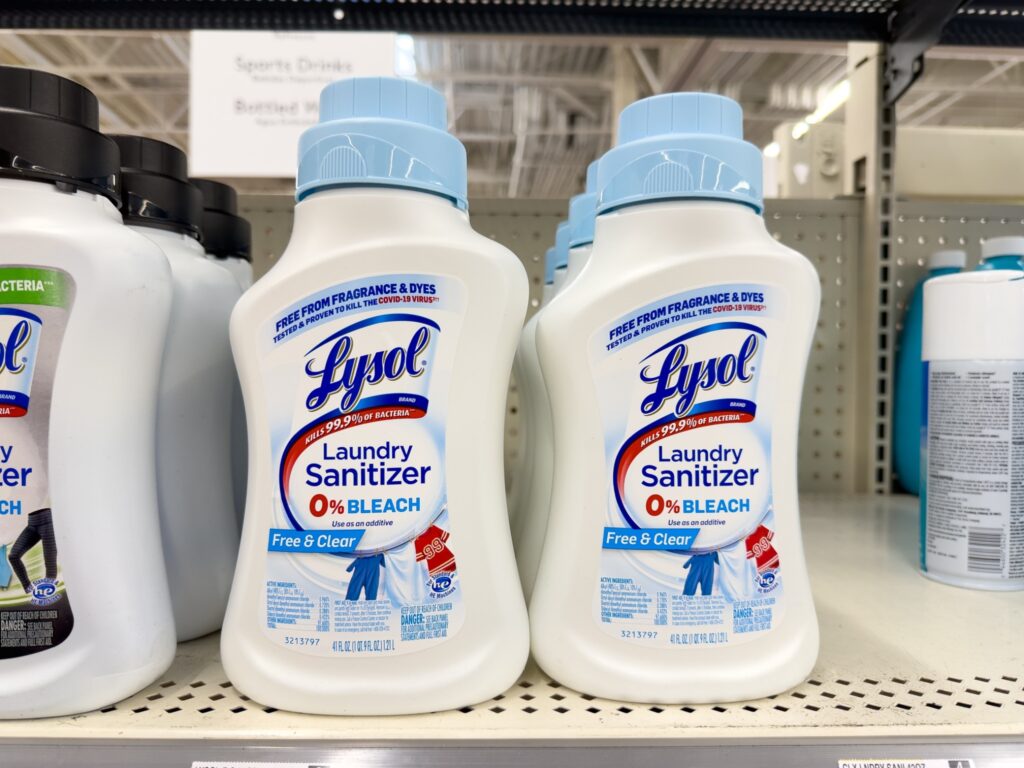
For completeness, it’s worth mentioning there are also bleach-free laundry sanitizer liquids you can buy that use chemical disinfectants like quaternary ammonium compounds. Products such as Lysol Laundry Sanitizer fall in this category. You add them to the rinse cycle, and they’re proven to kill 99.9% of bacteria even in cold water. These aren’t “natural” (they’re synthetic chemicals), but they are an alternative if you want to disinfect without chlorine bleach. They don’t damage fabrics or colors. If you don’t mind using a store-bought solution, these can be very effective on things like kids’ clothes, athletic wear, or underwear – any items where you want extra germ removal but can’t use hot water or bleach.
Pros: Extremely effective on bacteria, including eliminating odors. Easy to use as a pour-in additive. Safe on nearly all fabrics and colors. No bleach smell.
Cons: It’s still a chemical treatment (often containing benzalkonium chloride or similar ingredients), so it’s not as eco-friendly as vinegar or hydrogen peroxide. It also adds cost per load. Some people may be sensitive to the residual scent or ingredients. While great for routine disinfecting, it’s not “green” or natural – but it is an option if your priority is germ-kill without bleach.
When to skip DIY and trust the pros
Natural DIY solutions work well for day-to-day laundry sanitizing. But there are times when you might prefer to leave it to a professional laundry service. Busy families and germ-conscious professionals often realize their time is better spent elsewhere – and that’s where a service like Spincycle comes in. We’re clean-obsessed and equipped with commercial-grade tools to get clothes truly hygienic. For instance, our team uses an ozone sanitization process that oxidizes and eliminates bacteria from fabrics without any harsh chemicals. (Yes, we literally infuse ozone gas to disinfect every thread – it’s like giving your laundry a high-tech deep clean.)
You should consider outsourcing your laundry in situations like these:
- Your household has had a contagious illness (flu, stomach bug, etc.), and you want to ensure all bedding, towels, and clothing are fully disinfected. Professionals will use high heat and specialized sanitizers to stop the spread of germs.
- You’re dealing with tough contamination or odors that home methods can’t handle – think mildew-infested linens, a child’s accident on the mattress cover, or deeply musty vintage clothes. Expert cleaners have wash-and-fold services with soak treatments and commercial machines to rescue these items.
- You simply don’t have the time. Laundry takes around 4+ hours a week for the average person, and mastering DIY sanitizing tricks can be tedious. Instead of spending your weekend running extra hot cycles or mixing vinegar concoctions, you could reclaim those hours. Professional laundry services are more affordable than many think, and the convenience is priceless.
A quality laundry service will pick up your dirty clothes and return them clean, fresh, and sanitized – no effort required on your part. At Spincycle, for example, we treat your laundry with care and precision. Each load is processed separately in our state-of-the-art washers (so your clothes aren’t mixing with strangers’ items). We use the hottest appropriate water and can add fabric-safe sanitizing agents on request. Every order is dried at the proper heat setting to ensure no lingering moisture or germs. We even hand-inspect and fold everything into neat, drawer-ready piles. In short, we do the heavy lifting so you can have peace of mind.

Perhaps the biggest benefit of going pro is consistency and confidence. You don’t have to wonder if that cold-water wash really killed the bacteria on your toddler’s clothes – you know the professionals have taken care of it. Plus, you skip the risk of accidental damage from DIY experiments (no more bleach stains or shrunken sweaters). Many of our customers say the time saved and the extra level of clean is well worth it. Instead of juggling vinegar, baking soda, and multiple wash cycles, you can schedule a pickup, relax, and let us deliver impeccably clean, sanitized laundry to your door.
Bottom line: You can absolutely sanitize your laundry without bleach by using hot water, natural additives like vinegar or tea tree oil, and other smart techniques. These methods are effective for everyday needs and are gentler on your clothes (and nose!). But when life gets busy or you want guaranteed germ-busting along with perfect folding, consider calling in a little help from the pros. Your clothes will be just as clean – arguably cleaner – and you’ll get back hours of your week. That’s a disinfected win for you and your wardrobe, all without a drop of chlorine bleach.