Baking Soda vs Washing Soda for Laundry
Ever wonder whether baking soda or washing soda is the better choice for laundry day? These two pantry staples both double as natural laundry boosters, but they’re not interchangeable. Baking soda (the same kind you use in cookies) and washing soda (a stronger cousin used in cleaning) each bring unique benefits to your wash. Given that the average American household tackles around 7–8 loads of laundry per week—spending about 4.5 hours weekly on this never-ending chore—it’s no surprise people look for simple, cheap tricks to get cleaner, fresher clothes faster. In this introduction, we’ll explain how each “soda” is used in laundry and why they’re often compared. By the end, you’ll know the key differences between baking soda vs. washing soda for laundry, when to use each one, whether you can combine them, and what precautions to take for safe, effective washing.
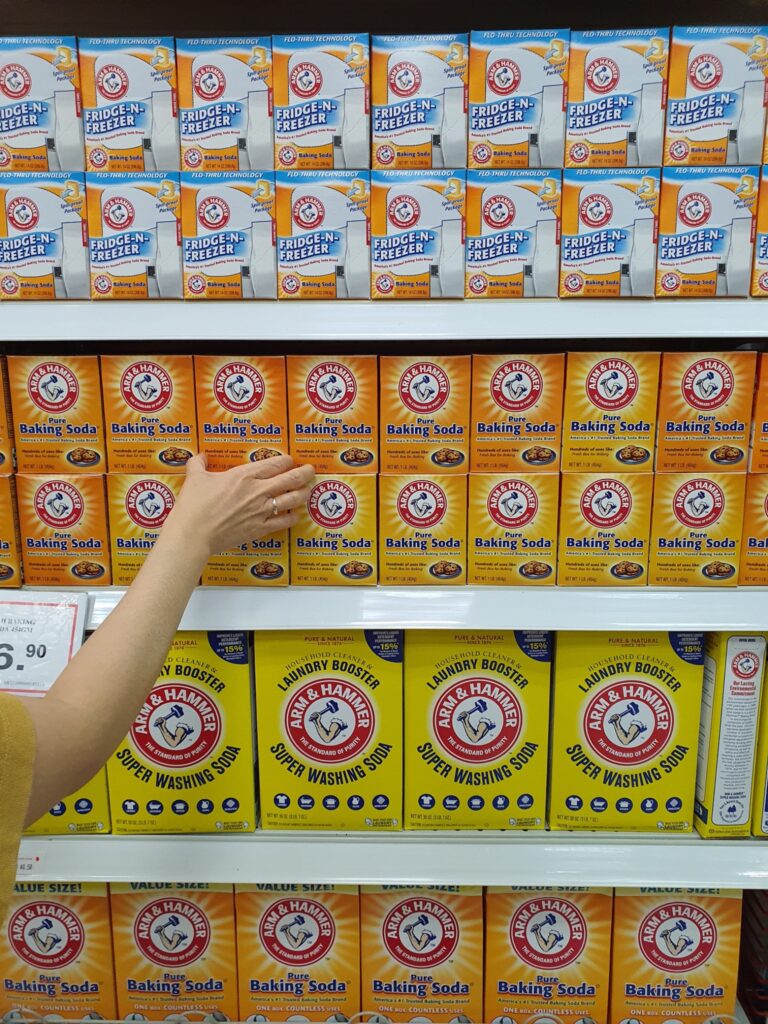
Key Differences Between Baking Soda and Washing Soda
At a glance, baking soda and washing soda sound similar – they’re both white powders, both alkaline, and both can boost your laundry routine. But there are some critical differences:
- Chemical identity & safety: Baking soda is sodium bicarbonate (NaHCO3), a mild base you can even use in cooking. Washing soda is sodium carbonate (Na2CO3), a much stronger base that is definitely not edible. In fact, washing soda is caustic enough to irritate skin – you’ll want gloves when handling it. Baking soda, by contrast, is gentle enough to touch (and brush your teeth with) because it’s far less alkaline.
- Alkalinity (pH level): Baking soda has a mildly alkaline pH around 8, while washing soda’s pH is about 11. Don’t let the small numbers fool you – the pH scale is logarithmic, so pH 11 is roughly 100 times more alkaline than pH 8. In practical terms, washing soda packs a much more powerful cleaning punch. It can break down heavy grease and stains that baking soda might only dent. However, that high alkalinity also means washing soda can fade colors or damage delicate fabrics if overused. Baking soda is milder; it won’t damage fibers or finishes in normal use, though it may work more gradually on tough grime.
- Uses in laundry: Both products are used as natural laundry boosters, but they excel in different areas. Baking soda is famous for neutralizing odors and softening wash water. It’s the go-to for freshening dingy laundry and is safe on most fabrics. Washing soda is all about heavy-duty cleaning: it supercharges your detergent for removing stubborn stains and softens hard water minerals in the process. Because washing soda’s granules are coarser and slower to dissolve, it works best in warm or hot water washes (and can leave a white residue if not fully rinsed). Baking soda, with its fine powder, dissolves quickly even in cold water and rinses out easily.
In short, baking soda is the mild-mannered odor remover and gentle cleaner, while washing soda is the high-octane stain fighter. As one cleaning expert puts it, both are effective cleaning agents, but baking soda is milder and more versatile than washing soda. Next, we’ll look at specific scenarios when you’d reach for baking soda vs. when washing soda is the better bet.
When To Use Baking Soda In Laundry
Baking soda is a laundry day hero when you need a gentle boost. We recommend using baking soda for loads where odor removal and fabric care are the priorities:
Neutralizing odors: If your clothes or towels have a funky smell, baking soda is your friend. It excels at eliminating musty, sour, or sweaty odors from fabrics. How? Baking soda neutralizes the acidic molecules that cause smells, effectively deodorizing your laundry. Got gym clothes that reek, or bath towels that smell mildewy? Tossing a half cup of baking soda into the wash can make a big difference in the freshness of the final load. It’s also great for pet bedding or smoke-scented items because it absorbs and neutralizes those persistent odors.
Gentle cleaning and brightening: For lightly soiled clothes or those with just a bit of dullness, baking soda provides a mild cleaning boost. It won’t replace detergent, but adding about 1/2 cup of baking soda along with your regular detergent can help slightly whiten and brighten your laundry. While it’s not a bleach, it can help shift minor stains and prevent dinginess by balancing the wash water’s pH. In fact, baking soda softens the water and helps detergents work more effectively. Many people use baking soda for laundry specifically to keep white clothes looking white (it’s great for freshening up dingy t-shirts or deodorizing yellowed pillowcases). It’s also color-safe on most dyed fabrics because it’s not overly alkaline. Your dark clothes and bright prints generally won’t fade with baking soda in the mix – it’s gentle enough for virtually everything that can handle water.
Protecting delicate fabrics: When dealing with delicate or heirloom items, you might choose baking soda over harsher cleaners. For example, if you have a vintage baby outfit or a blouse with a slight odor, a mild baking soda soak (dissolve a few tablespoons in a basin of water) can freshen it without risk. Washing soda, by contrast, would be far too strong for delicate fibers. (Note: extremely delicate fibers like silk or wool don’t love any base, even baking soda, so always test a small area or stick to gentle detergent for those.) Overall, baking soda is the safer choice for anything hand-wash-only or items where you’re nervous about stripping color or finish. It’s even used as a substitute for fabric softener by some, since it leaves clothes feeling softer and neutralizes any detergent residues that can cause stiffness.
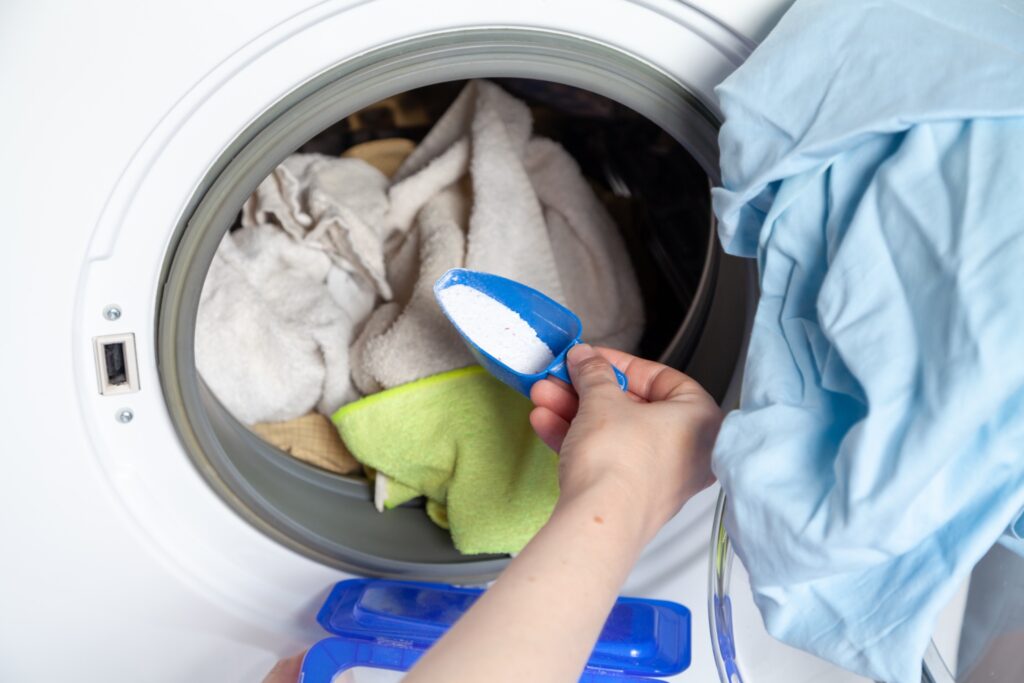
To use baking soda in laundry, simply measure out about 1/2 cup and sprinkle it in with your regular liquid or powder detergent at the start of the wash cycle. It will dissolve in the water and get to work deodorizing and gently scrubbing. For extra-stinky items, you can even presoak clothes in a baking soda solution (say, 1/2 cup baking soda in a bucket of warm water) for 30 minutes to overnight before washing. You’ll be amazed how much fresher towels, workout gear, and even cloth diapers can smell after a baking soda treatment! And because it’s so mild, you don’t have to worry about damaging fibers or washing machine parts in the process.
When To Use Washing Soda In Laundry
Washing soda is the heavyweight champ for laundry tasks that need serious muscle. You’ll want to use washing soda (sometimes sold as “laundry soda” or detergent booster) for situations like these:
Tough stain removal: Stubborn stains and ground-in grime are where washing soda shines. Its high alkalinity gives detergents a turbo boost against organic stains such as food grease, oil, grass, blood, and sweat. For example, washing soda can help break down oily stains on work clothes or kitchen aprons that would laugh at regular detergent. It’s known to remove a wide variety of stains from clothing, including notoriously tough ones like coffee, tea, wine, blood, and grease. If you have an old grass stain on jeans or yellow armpit stains on shirts, adding washing soda to the wash (or pre-soaking in a washing soda solution) can work wonders. Many laundry pros dissolve about 1/4 cup washing soda in warm water to create a powerful pre-soak for heavily stained garments. After a 30-minute soak, those stains are much more likely to come out in the wash.
Boosting detergent in hard water: If you live in an area with hard water, washing soda can be a game-changer for laundry. Hard water contains minerals that hinder cleaning – ever notice detergent not lathering or residues on clothes? Washing soda softens the water by precipitating out minerals, which allows your detergent to actually do its job. By raising the water’s pH to an optimal range, washing soda makes detergents more effective. The result: cleaner clothes, less mineral dinginess, and no need to use as much detergent. This is why washing soda has been a staple in laundry rooms for generations, especially before modern water softeners. It’s an eco-friendly way to treat hard water without resorting to phosphates. Even in normal water, a tablespoon or two of washing soda can give your detergent a noticeable cleaning boost, especially for washing heavily soiled items like sports uniforms, mechanics’ coveralls, or mud-splattered kids’ clothes.
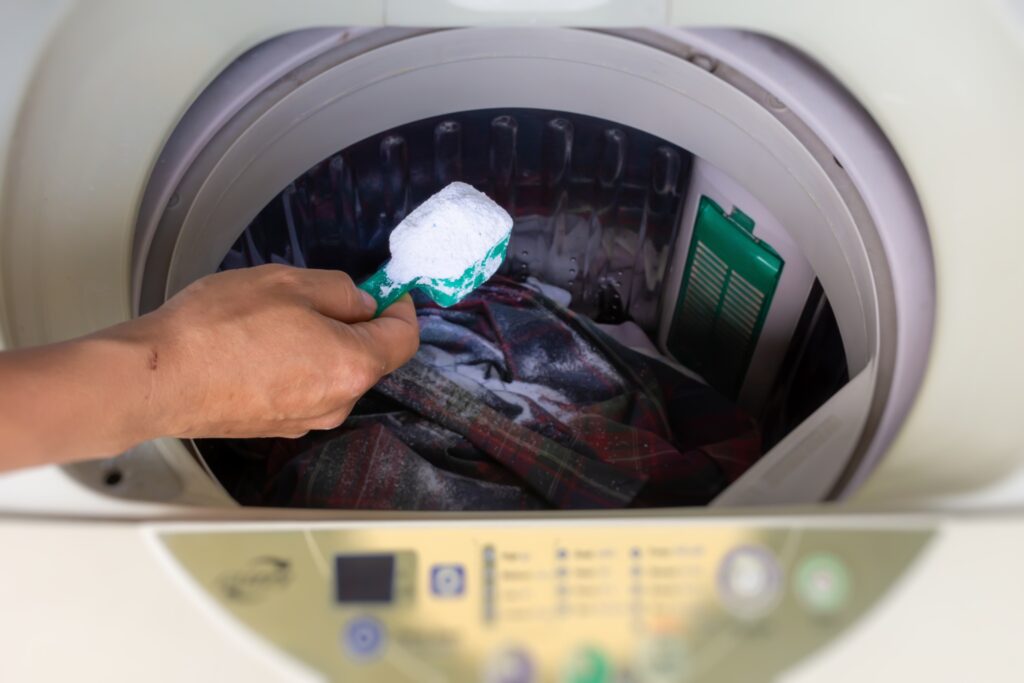
Whitening and brightening: Because washing soda is so powerful, it’s often used to restore dingy whites and lift out deep stains that cause yellowing or graying. For instance, you can soak stained white linens in a mixture of washing soda and warm water to help remove long-set sweat or oil discoloration. Washing soda’s pH is nearly as high as chlorine bleach (household bleach typically has pH 11–13, whereas washing soda is about 11). That explains why it can achieve bleach-like results in some cases without actual bleach. It’s particularly useful for whitening cotton sheets, t-shirts, and cloth diapers. Some people even use washing soda in homemade “oxygen bleach” recipes for a color-safe whitening solution. The bottom line: when you need extra help getting whites white or removing heavy buildup (mineral deposits, soap scum, etc.), washing soda is the tool for the job.
Caution with fabrics: Due to its strength, reserve washing soda for sturdy, washable materials. It’s perfect for things like towels, denim, canvas, and sheets. However, you’ll want to avoid using washing soda on delicate fibers (more on that below in Precautions). It can fade colors if used improperly, so it’s best for loads of all-whites or colorfast items. A good practice is to let the washer fill with water, add your dose of washing soda to dissolve, and then add clothes – this ensures no concentrated powder sits directly on fabric. When used correctly, washing soda can save heavily stained clothes that might otherwise be headed for the trash or rag pile.
Can You Use Both In The Same Load?
What if you have a load of laundry that is both smelly and stained? Can baking soda and washing soda be used together? The answer is generally yes – you can use both in one load, and in fact some homemade laundry formulas intentionally combine them. Because baking soda and washing soda are both alkaline (and essentially different forms of the same compound, with washing soda being a more concentrated form), they won’t react dangerously with each other. In fact, using them together can cover each other’s weaknesses. Baking soda will focus on deodorizing and pH buffering while washing soda attacks the toughest grime.
In practice, if you want to experiment with both, you might use a smaller amount of each. For example, try 1/4 cup washing soda plus 1/4 cup baking soda along with your detergent. Using a combination of washing soda and baking soda can raise the wash water’s pH to an optimal cleaning zone (around 10) while simultaneously neutralizing odors and breaking down stains. This one-two punch can be effective for particularly challenging loads – think mildewy, greasy shop rags or a batch of musty, food-stained kitchen towels. By boosting detergent performance and attacking odors, both together may get results that one alone would not.
That said, more is not always better. There are diminishing returns if you overload your wash with too many additives. A caution: adding a lot of alkaline powder (especially washing soda) could raise the pH so much that it starts to harm certain dyes or fabrics. Extremely high pH can also make some stains (like wine or coffee) harder to remove, since those “acidic” stains might need a bit of acidity to break them down. So, if you’re washing something heavily stained with coffee or tomato sauce, you might skip the baking soda in that load and just use detergent (and pretreat with an enzyme or vinegar separately). In normal cases, though, using a moderate amount of both baking and washing soda in the same load is safe and can be effective. Just be sure to dissolve each into the water at the start of the cycle. And of course, avoid using the combo on any garment that you wouldn’t use each ingredient on individually (e.g. wool or silk – neither soda is appropriate there).
Bottom line: Yes, you can use both together, but usually you don’t need to unless the laundry is extra filthy and smelly. For routine loads, it’s often better to choose one booster based on your main goal (odor vs. stains). That keeps things simple and minimizes any risk of over-doing it.
Precautions And What NOT To Do
Both baking soda and washing soda are great natural tools for laundry – but, like any cleaner, you need to use them wisely. Here are some precautions and “don’ts” to keep in mind:
- Don’t mix with bleach. Avoid adding baking soda or washing soda in the same load as chlorine bleach. While all three can be useful separately in laundry, mixing washing soda (a strong base) with bleach can cause excessive foaming and may reduce bleach’s effectiveness. Similarly, mixing baking soda with bleach isn’t necessary and could cause the bleach to degrade faster. If you need to use bleach, use it in a separate cycle or added at a different time than these soda boosters. This ensures each product can do its job properly without interference.
- Don’t mix acids and bases. You’ve probably heard of the classic science fair volcano made from vinegar and baking soda. In laundry, that fizz just means you’re neutralizing the very ingredients that are supposed to clean. So, don’t pour vinegar (an acid) and baking soda or washing soda (bases) into the machine at the same time – they’ll cancel each other out. It’s fine to use vinegar as a fabric rinse or mild softener after the wash, once baking soda or washing soda are rinsed out. Just don’t combine them directly. The same goes for other acidic cleaners like lemon juice.
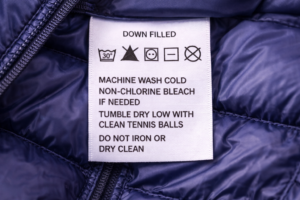
- Test delicate or colored items. Neither baking nor washing soda should be used on truly delicate fabrics like silk or cashmere, and even wool is debatable. These natural fibers don’t like high pH levels – for example, baking soda’s alkalinity can damage wool, silk, or cashmere fibers and may fade their dyes over time. Washing soda, being stronger, is definitely a no-go on those materials. For any garment with very bright or sensitive dyes, use a light hand with these additives. If in doubt, test a small hidden area of the fabric with a baking soda solution to see if any color lifts, or just stick to a gentle detergent. And remember, never use washing soda on anything labeled hand-wash only or dry-clean only.
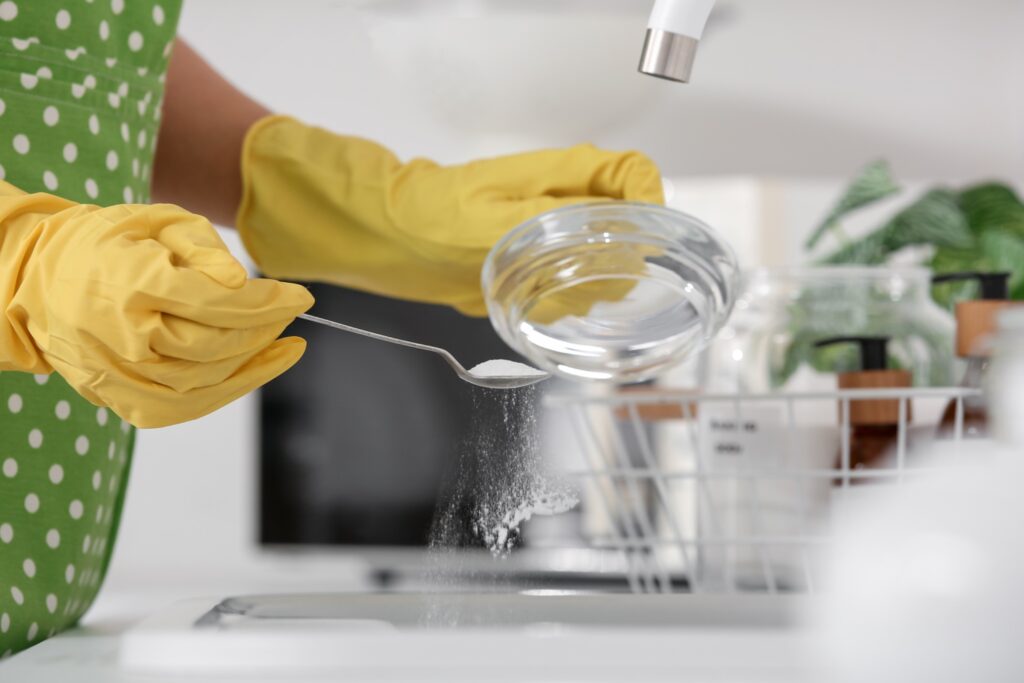
- Wear gloves and avoid inhalation. Baking soda is food-grade and generally harmless, but washing soda is caustic enough to cause irritation. Always wear rubber gloves when handling washing soda to protect your skin, and try not to breathe in the fine dust from either powder. If you’re measuring out washing soda, do it slowly to avoid sending particles in the air, and consider a mask if you have respiratory sensitivities. It’s also wise to keep both out of reach of children and pets. (Baking soda may be safe to ingest in small amounts, but a large dose isn’t healthy, and washing soda is unsafe to ingest at all.)
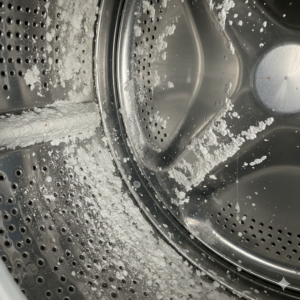
- Avoid using too much. More isn’t necessarily better. If you dump an excessive amount of washing soda in your washer, you could leave residue on clothes or even cause irritation to skin from leftover alkalinity. Stick to the recommended amounts: typically 1/2 cup of baking soda or 1/4 cup of washing soda per load is plenty. If you’re combining them, you might do roughly 1/4 cup each. Always make sure your washer rinses thoroughly (an extra rinse cycle can help if you’re worried). If you do see a white powdery residue on fabrics, cut back on the amount next time, and consider dissolving the soda in water before adding clothes.
One last note: Over long-term use, extremely heavy use of washing soda might have slight effects on your washing machine’s parts. Moderation is key – using sensible amounts of these boosters won’t harm modern machines. In fact, washing soda can help remove mineral scale in a washer, which is a plus. Just avoid the “more, more, more” temptation and you’ll be fine.
Baking Soda Vs. Washing Soda: A Quick Comparison
For an at-a-glance recap, here’s a quick comparison of baking soda vs. washing soda in the laundry context:
- Baking Soda (Sodium Bicarbonate): Mild base (pH ~8). A gentle cleaner and deodorizer that’s safe for most fabrics and colors. Great for neutralizing odors, softening water, and giving a slight cleaning boost. Edible and gentle (used in cooking and personal care).
- Washing Soda (Sodium Carbonate): Strong base (pH ~11). A powerful detergent booster and stain remover for sturdy fabrics. Excellent for cutting grease, lifting heavy stains, and conditioning hard water. Caustic and inedible (use with gloves; can fade or damage delicate materials).
In essence, use baking soda when you want a safe, mild enhancement (especially for smells and general freshness), and use washing soda when you need extra muscle for dirty, greasy, or stained loads. Both are inexpensive, natural additives that can make a noticeable difference in your laundry results when used appropriately.
Skip The Guesswork: Let The Pros Handle It
Feeling a little overwhelmed by laundry chemistry? Don’t worry – even though these DIY boosters are handy, you might prefer to leave the science to someone else. If you’d rather avoid all the measuring and experimenting, you can always drop your clothes off for a convenient wash & fold service, or use a self-service laundry with high-quality machines that take the guesswork out of cleaning. We’re clean-obsessed and focused on saving you time, after all. Considering that an average family already spends about 240 hours a year on laundry chores, outsourcing your laundry can give you back a big chunk of that time. Instead of tweaking pH levels and soaking stains at home, you could relax and let a professional team ensure your clothes come out perfectly fresh. Whether you choose to DIY with baking soda or washing soda, or hand off your hamper to a trusted local laundry service, the goal is the same: fresh, clean, “neighbor-approved” laundry with as little hassle as possible.